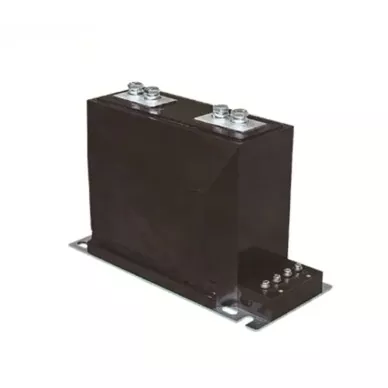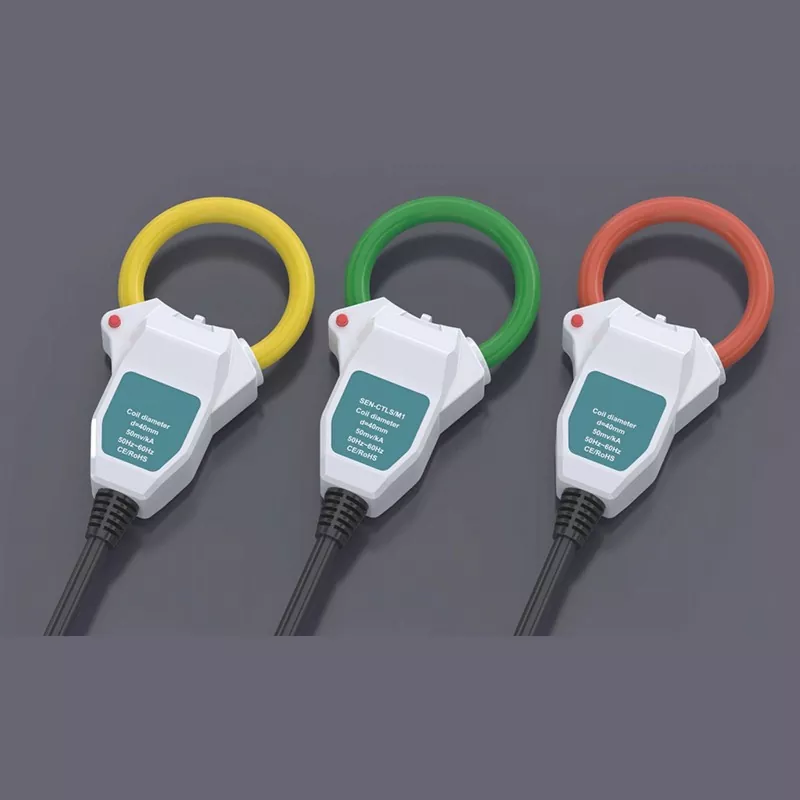



Junray Electrical manufactures the Cthw6 Outdoor Waterproof Current Transformer for low-voltage power distribution retrofits, energy monitoring, metering, and protection applications. Its split-core structure allows installation around existing cables or busbars without cutting conductors, helping reduce installation time and avoid unnecessary power interruptions.
A current transformer is an important sensing component for measuring and monitoring electrical current in distribution systems. For existing facilities, however, installing conventional closed-core transformers can require cable disconnection, busbar removal, or planned shutdowns. The CTHW6 design addresses these challenges with an open-close split-core structure, high-precision magnetic core, insulated flame-retardant housing, and waterproof connection design. These features make it suitable for industrial plants, commercial buildings, distribution cabinets, photovoltaic systems, energy storage applications, and EV charging infrastructure where reliable current acquisition and convenient retrofit installation are important.
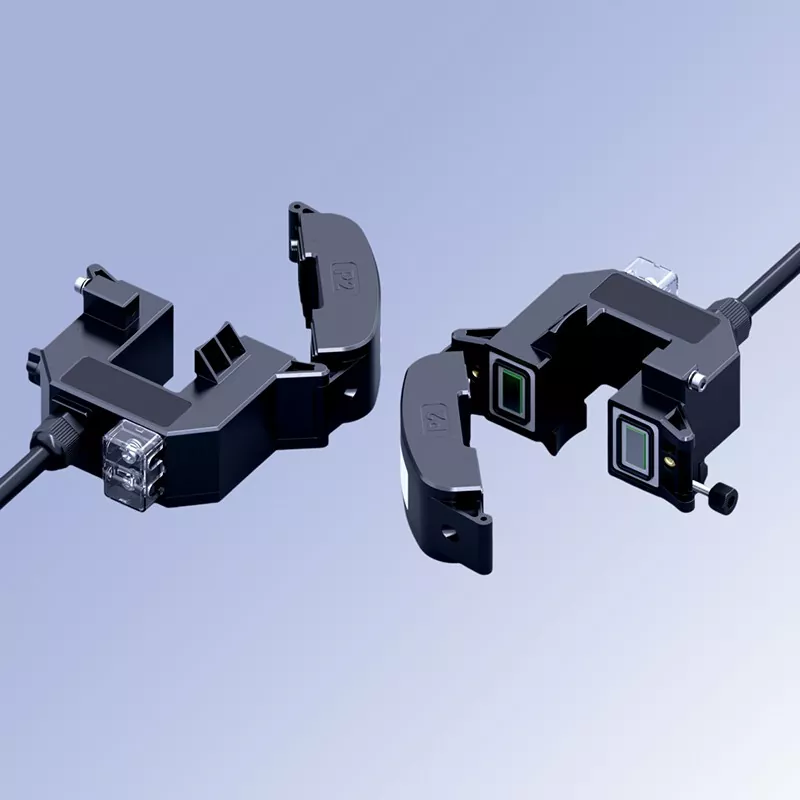
Table of Contents
- What Is a Cthw6 Outdoor Waterproof Current Transformer?
- Why Is Split-Core Design Important for Power Distribution Retrofits?
- What Key Features Support Reliable Current Measurement?
- Cthw6 Technical Features at a Glance
- How Is the Transformer Installed?
- Where Can the Transformer Be Used?
- What Should Buyers Consider Before Selection?
- What Does a Real Retrofit Application Show?
- Frequently Asked Questions
What Is a Cthw6 Outdoor Waterproof Current Transformer?
A current transformer, commonly called a CT, converts a high primary current into a smaller secondary current that can be safely measured by meters, monitoring terminals, or protection devices. In low-voltage distribution systems, this enables operators to obtain useful electrical data without directly connecting sensitive measuring equipment to the full primary current.
The CTHW6 series is designed specifically for applications where existing power circuits need monitoring or upgrading. Unlike traditional solid-core transformers, its split-core construction can be opened and clamped around an existing cable or busbar. This makes it particularly useful when the electrical infrastructure is already operating and extensive rewiring is undesirable.
The outdoor-oriented construction also combines an insulated engineering-plastic housing with internal epoxy encapsulation and a waterproof cable connection. These design elements help the transformer withstand moisture, dust, temperature changes, and other conditions encountered in distribution equipment and outdoor installations.
Why Is Split-Core Design Important for Power Distribution Retrofits?
Retrofit projects have different requirements from new electrical installations. When a new distribution cabinet is being assembled, engineers can reserve space and install conventional through-hole transformers before energization. An existing facility may not have this flexibility.
Traditional installation can involve disconnecting conductors or dismantling busbars. Depending on the facility, this may result in production interruptions, additional labor, and complicated outage coordination. A split-core transformer provides another approach: the housing opens, the conductor is positioned through the aperture, and the housing is closed and locked.
Key retrofit benefits
- Reduced installation disruption: Existing cables do not need to be cut for the split-core installation method.
- Faster field installation: The open-close structure simplifies positioning around existing conductors.
- Lower modification requirements: Existing distribution layouts can be retained instead of being extensively rebuilt.
- Flexible monitoring upgrades: Additional current sensing can be introduced to existing circuits.
- Better suitability for operating facilities: It is useful where minimizing planned downtime is an important project requirement.
For safety-critical electrical work, installation should always be performed by appropriately qualified personnel following the applicable electrical safety procedures. A split-core design improves installation convenience, but it does not eliminate the need for safe working practices.
What Key Features Support Reliable Current Measurement?
High-precision magnetic core
The transformer uses a grain-oriented silicon steel core designed to provide high magnetic permeability, low magnetic loss, and a broad linear operating range. The product information specifies Class 0.5/0.5S metering accuracy, supporting applications where stable current data is required for measurement and monitoring.
Secure mechanical locking
After the conductor is positioned inside the aperture, the two housing sections are closed and secured with a locking screw. Proper closure helps maintain consistent magnetic-core alignment, which is important for measurement stability.
Flame-retardant insulated housing
The housing is manufactured from high-strength flame-retardant engineering plastic. Internal vacuum-poured epoxy encapsulation provides additional protection against moisture, dust, and corrosion while improving insulation performance.
Clear polarity identification
P1/P2 markings and secondary terminal polarity indicators are clearly identified on the product. This helps technicians correctly establish the primary and secondary connections during installation and commissioning.
Waterproof cable connection
A waterproof cable gland is incorporated at the output connection. For outdoor or particularly humid installations, additional sealing at wiring connections can further improve environmental protection.
Cthw6 Technical Features at a Glance
| Feature | CTHW6 Design | Practical Value |
|---|---|---|
| Structure | Split-core, open-close design | Convenient retrofit installation around existing conductors |
| Installation | Clamp-on structure with locking screw | Reduces cable modification and installation complexity |
| Accuracy | Class 0.5/0.5S | Supports accurate metering and current monitoring |
| Core Material | Grain-oriented silicon steel | High permeability and stable magnetic performance |
| Housing | Flame-retardant engineering plastic | Insulation, impact resistance, and environmental durability |
| Encapsulation | Vacuum-poured epoxy resin | Improves resistance to moisture, dust, and corrosion |
| Connection | Waterproof cable gland | Helps protect the output connection in demanding environments |
| Applications | Metering, monitoring, protection, retrofit | Suitable for diverse low-voltage distribution projects |
Buyers should confirm the required transformation ratio, aperture dimensions, conductor type, accuracy class, installation environment, and secondary output requirements before ordering. Customized non-standard specifications can also be discussed according to project requirements.
How Is the Transformer Installed?
The open-close design is intended to make field installation more straightforward. A typical installation sequence includes the following steps:
- Loosen the side locking screw and open the transformer housing.
- Position the cable or busbar through the center of the aperture.
- Make sure the conductor is properly centered and does not interfere with the housing.
- Close the upper and lower sections and tighten the locking screw securely.
- Open the transparent terminal cover and connect the secondary wiring according to the polarity markings.
- Inspect the mechanical closure, wiring, insulation, and measurement signal before commissioning.
One important safety point is that a CT secondary circuit should not be left open while the primary conductor is energized. An open secondary can generate a dangerous voltage. Qualified electrical professionals should therefore follow the manufacturer's instructions and applicable electrical safety requirements during installation, testing, and maintenance.
Where Can the Transformer Be Used?
The combination of split-core installation and environmental protection makes the CTHW6 suitable for a broad range of low-voltage electrical monitoring applications.
Industrial power monitoring
Production lines, pumps, fans, compressors, machine tools, and other electrical loads can be monitored through current measurement. This data can support equipment operation analysis and energy management.
Commercial and building distribution
Office buildings, commercial complexes, hospitals, and data centers often contain multiple branch circuits that require monitoring. Split-core transformers can simplify upgrades to existing distribution systems.
Smart power distribution
The transformer can be integrated with multifunction power meters, intelligent monitoring terminals, and other electrical monitoring equipment to support current data acquisition and remote monitoring.
Renewable energy and EV infrastructure
Photovoltaic grid-connected cabinets, energy storage systems, and EV charging infrastructure can require current sensing for operational monitoring and protection. The appropriate CT ratio and mechanical dimensions should be selected according to the actual circuit.
Distribution system retrofits
Aging electrical installations are a particularly relevant application. Instead of redesigning an entire distribution cabinet, engineers can add current monitoring to selected circuits using a suitable split-core configuration.
What Should Buyers Consider Before Selection?
Selecting a current transformer should begin with the electrical and mechanical requirements of the target circuit rather than simply choosing a model based on appearance. The following points should be confirmed before procurement:
- Primary current: Confirm the normal and maximum current of the circuit.
- Current ratio: Match the CT ratio to the meter, monitoring device, or protection system.
- Aperture size: Ensure the cable or busbar can pass through the opening without interference.
- Conductor configuration: Check whether the installation uses a round cable or rectangular busbar.
- Accuracy requirement: Determine whether the project requires standard metering accuracy or a more specialized measurement specification.
- Environmental conditions: Consider outdoor exposure, humidity, dust, temperature, vibration, and possible chemical contamination.
- Secondary connection: Confirm the terminal configuration and polarity requirements of the connected device.
- Installation space: Verify that sufficient clearance is available for opening and locking the split-core housing.
A reliable supplier should be able to provide model-selection assistance based on these parameters. This is particularly valuable for retrofit projects containing many different cable sizes or circuit ratings.
What Does a Real Retrofit Application Show?
A documented retrofit project involving a precision hardware and injection molding factory in Dongguan illustrates the practical value of split-core current transformers. The facility contained 86 low-voltage distribution circuits serving injection molding, stamping, mold processing, cooling, lifting, lighting, and other loads.
The existing system lacked adequate branch-circuit residual current monitoring. Conventional retrofit methods would have required extensive conductor modification and production shutdowns. The project therefore used openable split-core transformers selected according to conductor dimensions.
According to the project information published by Junray Electrical, the installation and commissioning of all 86 units were completed in five days. The system subsequently provided branch-level residual current monitoring, allowing abnormal circuits to be identified more quickly. The project also reported that troubleshooting time fell from an average of 3.5 hours to less than 20 minutes after the retrofit.
This example demonstrates an important principle for electrical retrofit planning: the value of a current transformer is not limited to its measurement function. Installation method, environmental resistance, compatibility with monitoring equipment, and maintainability can all influence the overall effectiveness of a distribution upgrade.
For additional product information, buyers can review the Cthw6 Outdoor Waterproof Current Transformer product page and explore Junray Electrical's range of instrument transformers for different electrical monitoring requirements.
Frequently Asked Questions
What is the main advantage of a CTHW6 split-core current transformer?
Its main installation advantage is the open-close structure, which allows the transformer to be positioned around an existing cable or busbar without cutting the conductor. This makes it useful for low-voltage distribution retrofit and monitoring projects.
Can the CTHW6 be used outdoors?
Yes. The product is designed for outdoor-oriented applications and incorporates an insulated engineering-plastic housing, epoxy encapsulation, and a waterproof cable connection. Additional sealing may be recommended for wiring terminals in particularly humid environments.
What accuracy class does the CTHW6 support?
The published product information specifies Class 0.5/0.5S metering accuracy. The exact specification should be confirmed against the requirements of the intended meter and electrical monitoring system before procurement.
Can it monitor existing cables without disconnecting them?
The split-core structure is specifically designed for installation around existing cables or busbars, avoiding the need to cut the conductor. However, live electrical work must only be performed by qualified personnel following applicable safety procedures.
What information is needed when selecting a CTHW6 model?
Important selection information includes primary current, required current ratio, conductor type, cable or busbar dimensions, aperture size, accuracy requirement, installation environment, and secondary connection requirements.
Does Junray Electrical provide customization?
Yes. Junray Electrical states that non-standard specifications can be customized according to installation dimensions and parameter requirements. Its technical team can also provide model-selection guidance and after-sales technical support.
Conclusion
A well-designed current transformer can make electrical monitoring more practical while supporting the modernization of existing low-voltage distribution systems. With its split-core structure, Class 0.5/0.5S accuracy specification, insulated flame-retardant housing, epoxy encapsulation, and waterproof connection design, the CTHW6 is suited to applications where installation flexibility and reliable current acquisition are important. If you are planning a distribution retrofit, energy monitoring project, or outdoor electrical monitoring application, contact us at Junray Electrical with your current rating, conductor dimensions, accuracy requirements, and application conditions to discuss model selection and a suitable customized solution.