
Are you still using the old-fashioned knife switch? When a circuit short-circuits or is overloaded, it cannot automatically disconnect and can only watch helplessly as the wires get hot, the insulation melts, and even cause a fire. At the ends of homes, offices, or factories, this "unprotected" state is a huge safety hazard.
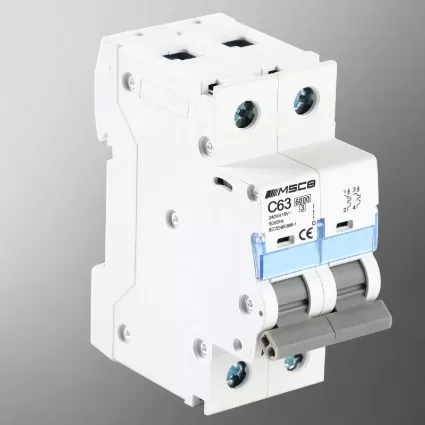
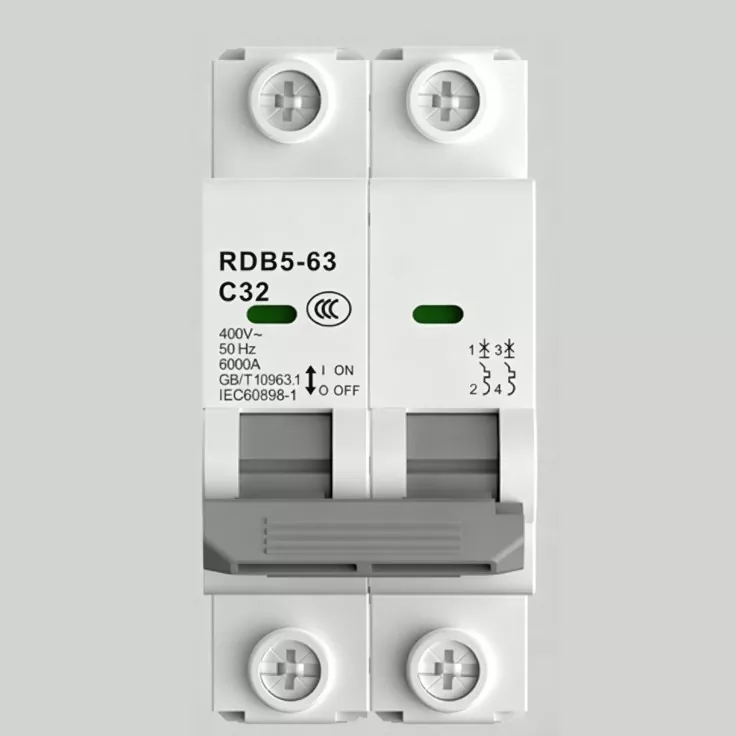
Junray Electrical's Miniature Circuit Breaker was specifically designed to address this issue. It replaces the traditional knife switch and acts as the "smart sentinel" of the circuit. Once it detects an abnormal current (such as overload or short circuit), it will automatically trip in an extremely short time, cutting off the power supply. This not only protects expensive electrical equipment but also prevents circuit burnout and electric shock accidents, building a solid defense line for your and your family's safety.
The core competitiveness of Miniature Circuit Breaker lies in its precise tripping characteristics and modular design:
Dual protection mechanism: Built-in thermal tripping and magnetic tripping components. The thermal tripping is responsible for dealing with long-term overloads to prevent line overheating; the magnetic tripping is responsible for dealing with instantaneous short circuits and quickly cutting off the fault. The combination of the two ensures comprehensive line safety.
Ultra-compact, saving space: Designed specifically for terminal power distribution, it is very small in size. It can be easily installed in standard PZ30 distribution boxes, occupying very little space, allowing you to arrange more circuits in the limited distribution box and perfectly solve the problem of crowded space.
Highly cost-effective: Compared to expensive plastic shell circuit breakers, the price of the small circuit breaker is highly advantageous. For terminal line protection, it provides just the right performance, allowing you to obtain industrial-grade safety protection without spending a large amount of money, significantly reducing project costs.
As a professional Manufacturer with profound technical expertise, Junray Electrical strictly adheres to the national standards for small circuit breakers in its production. Our factory is equipped with advanced automated assembly lines and testing laboratories, ensuring that every product can withstand rigorous tests.
This Miniature Circuit Breaker features a reliable operating mechanism, with distinct opening and closing sensations. It has an extremely low failure rate. Each circuit breaker undergoes strict power-on debugging, opening and closing tests, and protection characteristic tests before leaving the factory, ensuring its stability and reliability even under a 6kA to 10kA breaking capacity. Whether it is frequent operation or sudden failures, it can handle them calmly and provide you with lasting safety assurance.
|
Rated Voltage |
AC 220V/380V |
|
Rated Frequency |
50Hz |
|
Rated Current |
6A~63A (Customizable) |
|
Division Capability |
6kA~10kA (Customizable) |
|
Number of Levels |
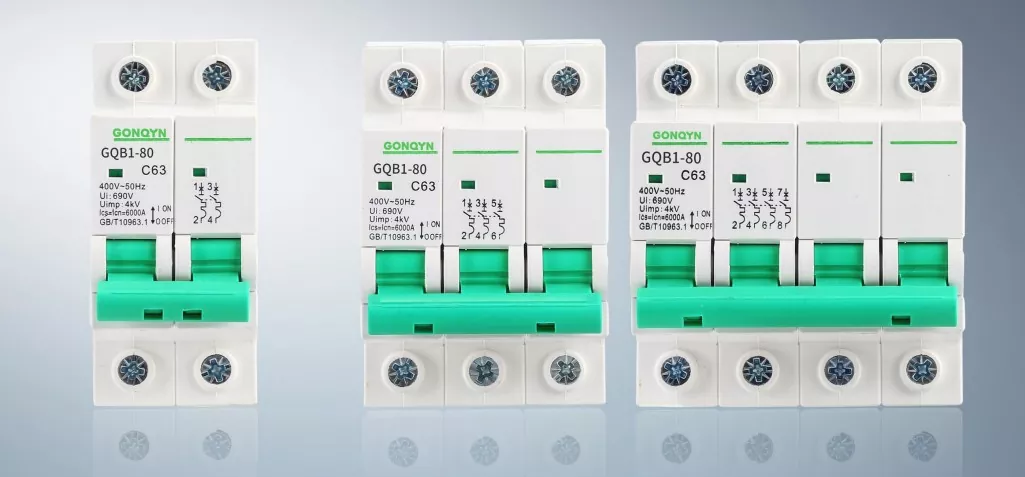
1P/2P/3P/4P |
Household power distribution: Protection for lighting and socket circuits to prevent household appliances from overheating.
Office / Community: Circuits for air conditioners and office equipment to ensure daily electricity supply.
Factory terminals: Protection for small equipment and control circuits to stabilize production.
I. Project Overview
This project involves the electrical safety upgrade and renovation of residential units and street-level shops within an older housing complex. The scope covers terminal power distribution systems, including residential service entry distribution, communal corridor lighting, shop socket circuits, air-conditioning power circuits, and emergency lighting circuits. The existing terminal switches relied heavily on outdated knife switches and substandard, generic miniature circuit breakers (MCBs). Issues included haphazard model selection, mismatched tripping curves, failure to trip during overloads or short circuits, frequent nuisance tripping, and fire hazards caused by faulty wiring. Unauthorized wiring modifications and excessive loads were common; during peak summer usage, incidents such as overheating wires, softened insulation, and socket fires frequently occurred, posing severe risks of electric shock and electrical fires and failing to meet electrical safety standards for civil buildings.
To standardize terminal distribution protection, eliminate electrical fire hazards, and ensure user safety, all existing units were replaced with compliant, standard-grade miniature circuit breakers (MCBs). Precise selection based on specific circuit types—lighting, sockets, and power—was implemented to ensure accurate overload and short-circuit protection, thereby fully standardizing the terminal power distribution safety system.
II. Pre-Renovation Issues
Failure of generic switches and frequent refusal to trip: Substandard, outdated circuit breakers failed to meet magnetic and thermal tripping performance standards; they did not trip during short circuits or severe overloads, leading directly to burnt wiring and fires.
Haphazard selection and lack of circuit separation: Lighting, sockets, and air conditioners shared the same switch without separate protection; a fault in a single circuit caused a total power outage for the entire unit, making troubleshooting difficult.
Mismatched tripping curves and frequent nuisance tripping: Standard "Type B" curves were used for power loads; motor starting currents caused frequent nuisance tripping, disrupting normal power usage.
Switch aging, overheating, and poor contact: Oxidized contacts and loose connections in old switches caused excessive temperature rise during prolonged full-load operation, resulting in carbonization of the distribution box housing and strong odors.
Lack of graded protection and low safety levels: The absence of precise terminal MCB protection meant faults directly impacted upstream switches, easily causing "sympathetic tripping" (tripping of upstream breakers) and large-scale power outages.
III. Equipment Configuration Plan
In accordance with standards for terminal power distribution and the specific load characteristics of lighting, socket outlets, and power equipment, this project utilizes standardized Miniature Circuit Breakers (MCBs). These are precisely matched with B- and C-type tripping curves to achieve refined, tiered protection at the terminal level.
Core Equipment Specifications
Device Type: Miniature Circuit Breaker (MCB) – Standard for residential and commercial applications
Rated Voltage: AC 220V/380V; compatible with all low-voltage terminal circuits
Current Ratings: Precisely configured options (10A, 16A, 20A, 25A, 32A, 63A)
Tripping Curves: Type B (lighting/resistive loads); Type C (sockets, air conditioners, and inductive power loads)
Protection Mechanism: Dual-protection structure featuring thermal tripping for overload and electromagnetic tripping for short-circuit protection
Structural Features: Compact size, modular DIN-rail mounting, sensitive breaking performance, and flame-retardant housing
Circuit Configuration: Separate circuits for lighting, general sockets, air conditioners, and high-power equipment
Tier Positioning: Final-stage terminal protection to prevent burnout of end-line wiring and equipment, as well as electrical fires
IV. Construction and Application Highlights
Precise circuit protection and fault isolation: Independent circuit protection for lighting, sockets, and power equipment ensures that a fault in one circuit trips only that specific breaker without affecting the power supply to the rest of the premises, facilitating easy troubleshooting and maintenance.
Load-matched curves prevent nuisance tripping and failure to trip: Type B breakers for lighting offer high interference resistance, while Type C breakers for power loads withstand startup surges; this effectively resolves common issues such as frequent nuisance tripping or failure to trip during faults.
Dual-tripping mechanism for sensitive, reliable protection: Thermal tripping provides delayed protection against mild overloads, while electromagnetic tripping offers instantaneous protection against sudden short circuits, effectively handling various fault scenarios.
Flame-retardant and explosion-proof for high safety: High-quality flame-retardant housing and internal arc-extinguishing grids prevent flames or explosions during short-circuit faults, eliminating the risk of fire within the distribution box.
Modular installation for easy O&M: Standard DIN-rail design ensures neat layout and clear labeling, making future maintenance, system expansion, and component replacement extremely convenient. V. Operational Results After Retrofitting
Complete elimination of electrical fire hazards: Precise tripping in response to overloads and short circuits prevents overheating, insulation burnout, and socket fires.
Significantly improved power stability: Optimized load matching ensures no nuisance tripping, switch overheating, or arcing caused by loose connections.
Precise fault isolation: Faults in a single circuit trigger power disconnection only for that circuit, ensuring uninterrupted power supply to others and greatly enhancing the user experience.
Standardized terminal power distribution: Clear hierarchical protection (upstream/downstream) prevents non-selective tripping or failure to trip, fully complying with low-voltage graded protection standards.
Successful electrical safety acceptance: Rational circuit segmentation, appropriate equipment selection, and sensitive protection mechanisms ensured the successful completion of the electrical system upgrade for the older residential complex.
VI. Case Summary
Miniature Circuit Breakers (MCBs) are the most critical, widely used, and fundamental protective devices at the terminal end of low-voltage power distribution systems. They are specifically designed to protect lighting, socket, and small power circuits in residential, commercial, and industrial settings. Comparative distinction: MCB (terminal protection) → MCCB (branch protection) → ACB (main incoming line protection). With their compact size, sensitive response, and granular circuit control, MCBs serve as the final line of defense in preventing terminal-level electrical fires and ensuring personal safety; they are an essential standard component in all civil and industrial power distribution projects.
Choosing Junray Electrical is not merely choosing a Supplier; it is choosing a reliable safety partner. We have a professional team of 50 people, including 5 full-time quotation engineers, who can provide you with fast and precise customized services.
We promise to offer global rapid response 7×24 hours. If you are looking for a Miniature Circuit Breaker that can protect terminal lines and comply with safety standards, don't hesitate any longer. Contact us immediately to get free technical consultation and quotations, and let Junray Electrical build a safe, stable, and efficient power distribution system for you.
Question: What are the differences between miniature circuit breakers and plastic-case circuit breakers?
Answer: The main differences lie in size and application scenarios. The miniature circuit breaker is smaller in size and is suitable for installation on the distribution box rails. It is mainly used for protecting terminal lines (such as household lighting and sockets), and is cheaper in price. While the plastic-case circuit breaker is larger in size and is mainly used for protecting main lines. For terminal protection, using a miniature circuit breaker is the most economical and reasonable choice.
Question: Can this circuit breaker be customized?
Answer: Yes, it can. We can customize the rated current (6A - 63A), the breaking capacity (6kA - 10kA), and the pole number (1P - 4P) according to your specific requirements, to perfectly meet your terminal line protection needs.
Question: Is installing this circuit breaker complicated?
Answer: We adopt a standardized rail installation design. Just insert it into the standard rail of the distribution box and connect the incoming and outgoing lines. No complex tools are needed, which significantly shortens the construction time.
Address
No. 318, Weidian Road, Economic Development Zone, Yueqing City, Zhejiang Province, China
Tel