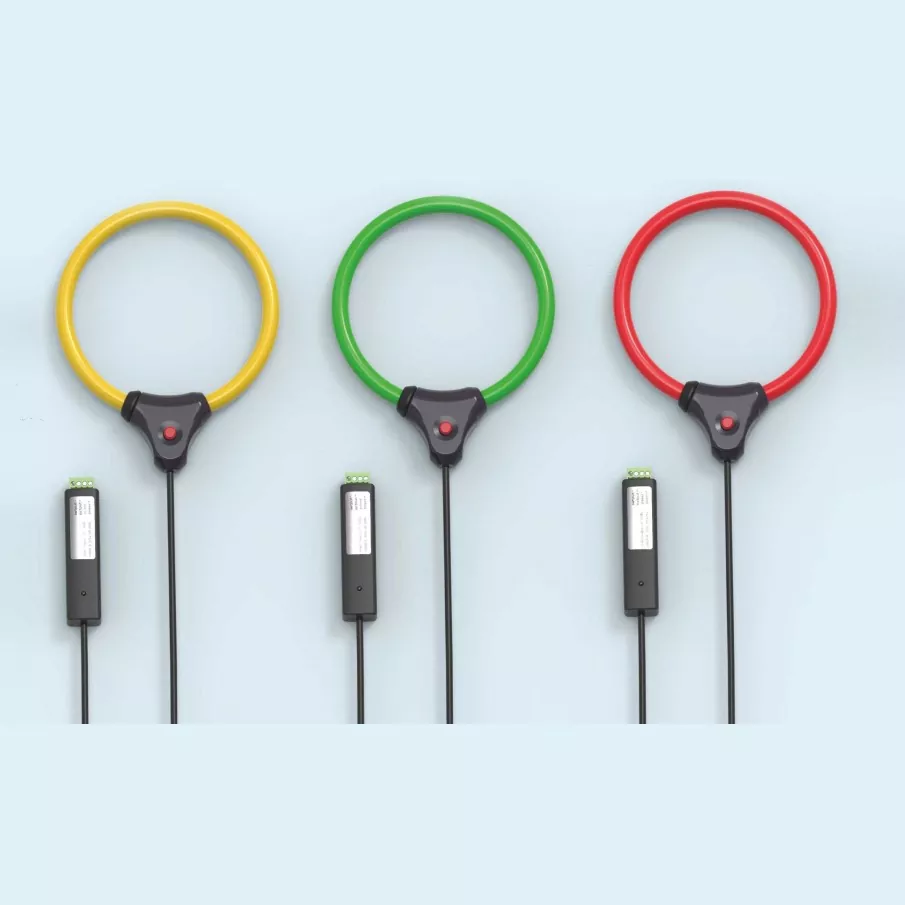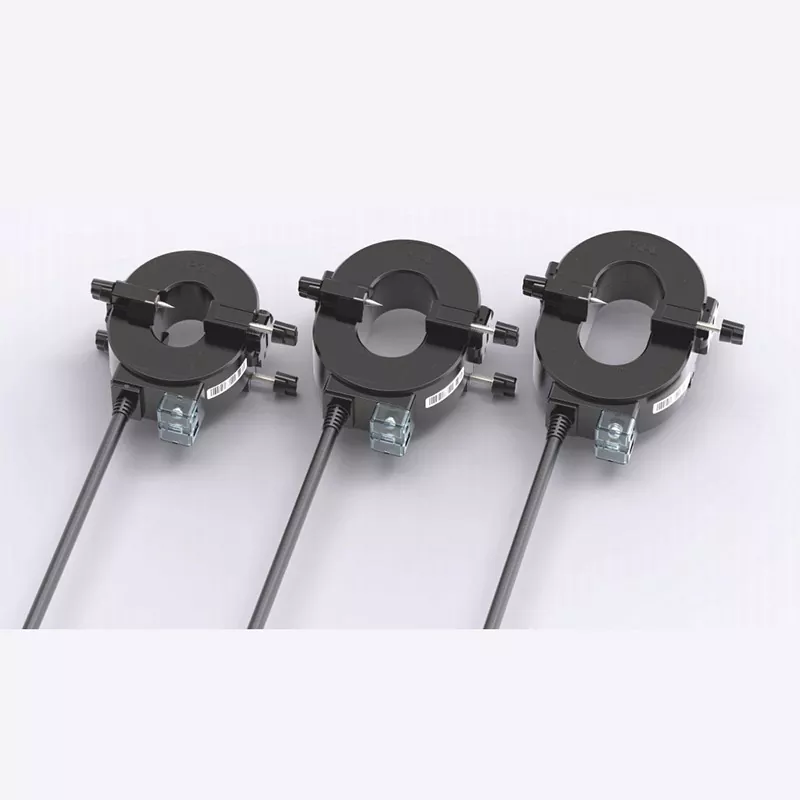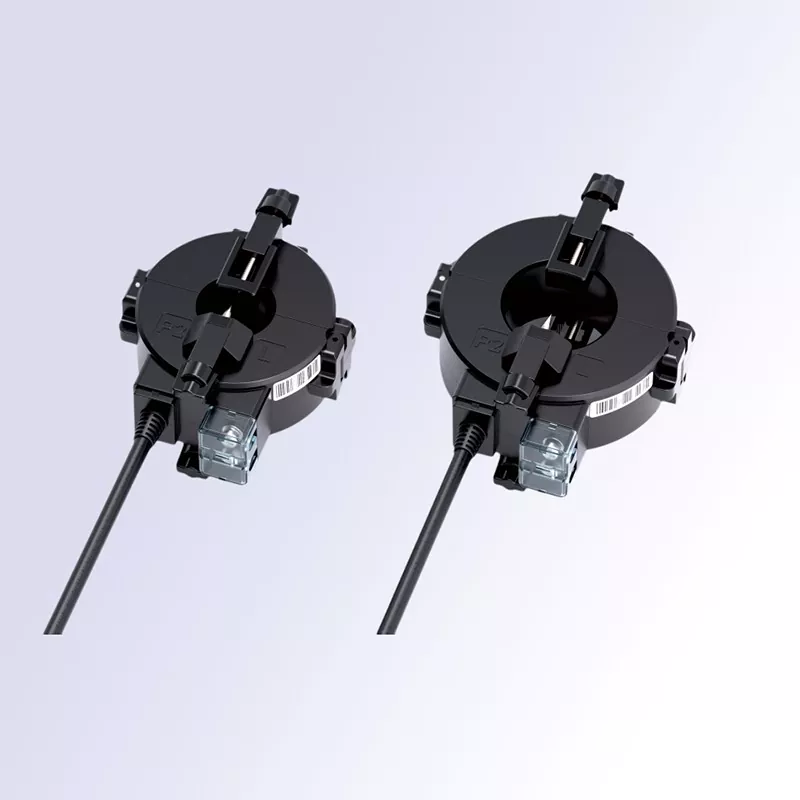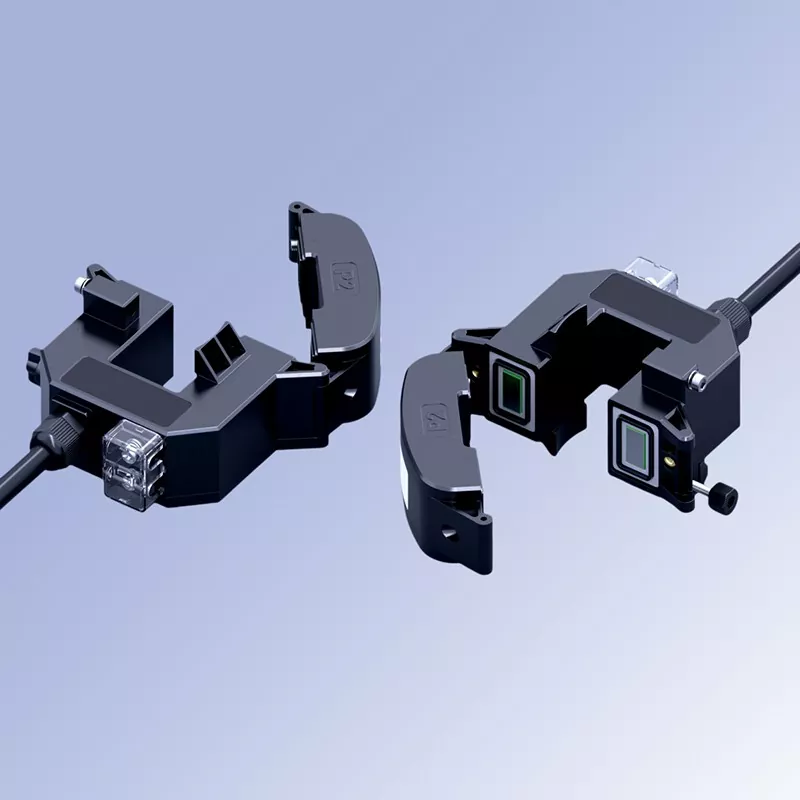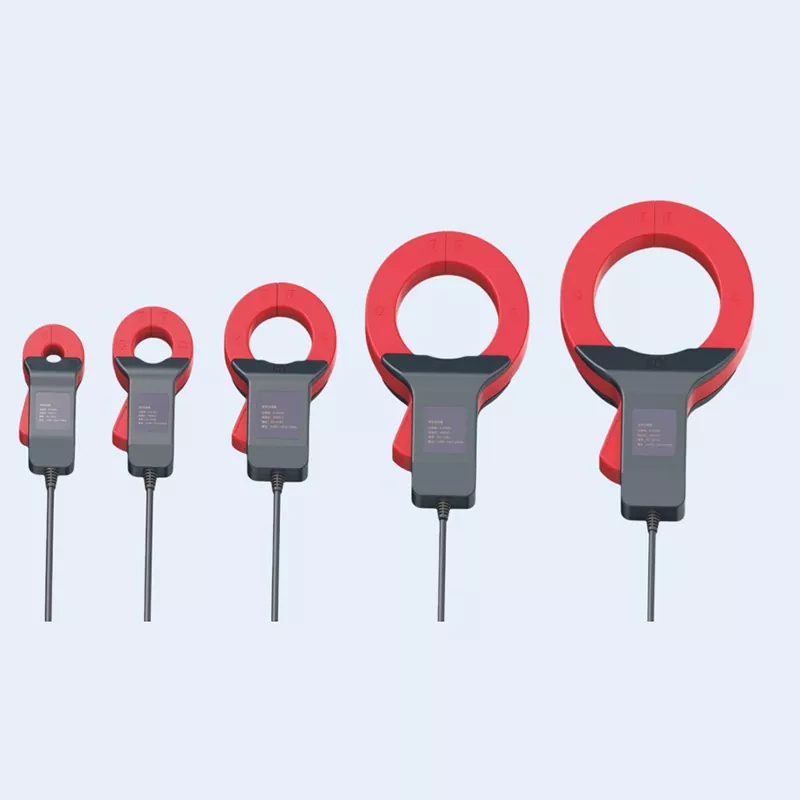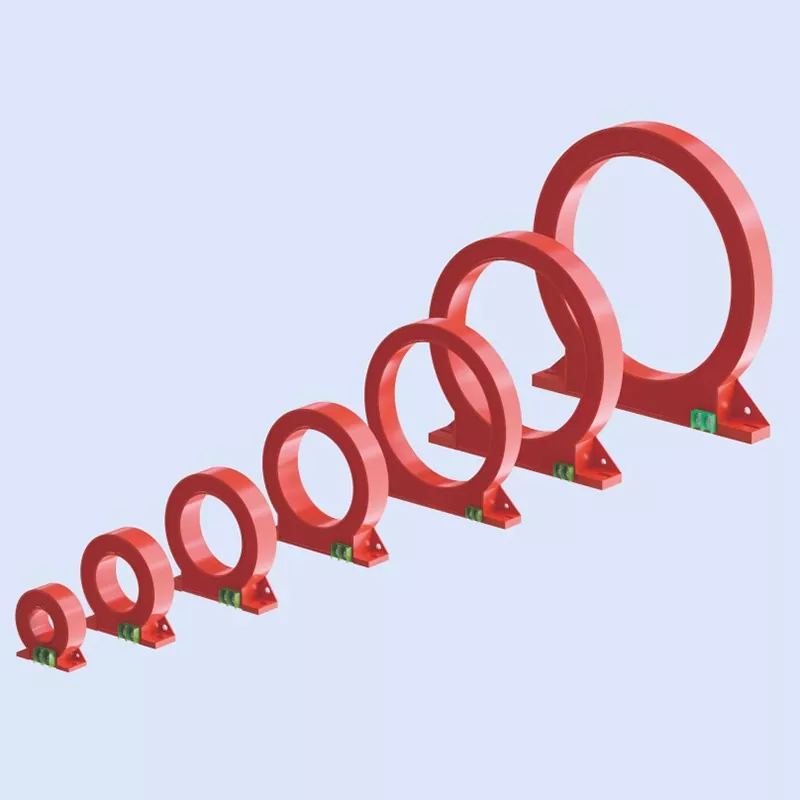

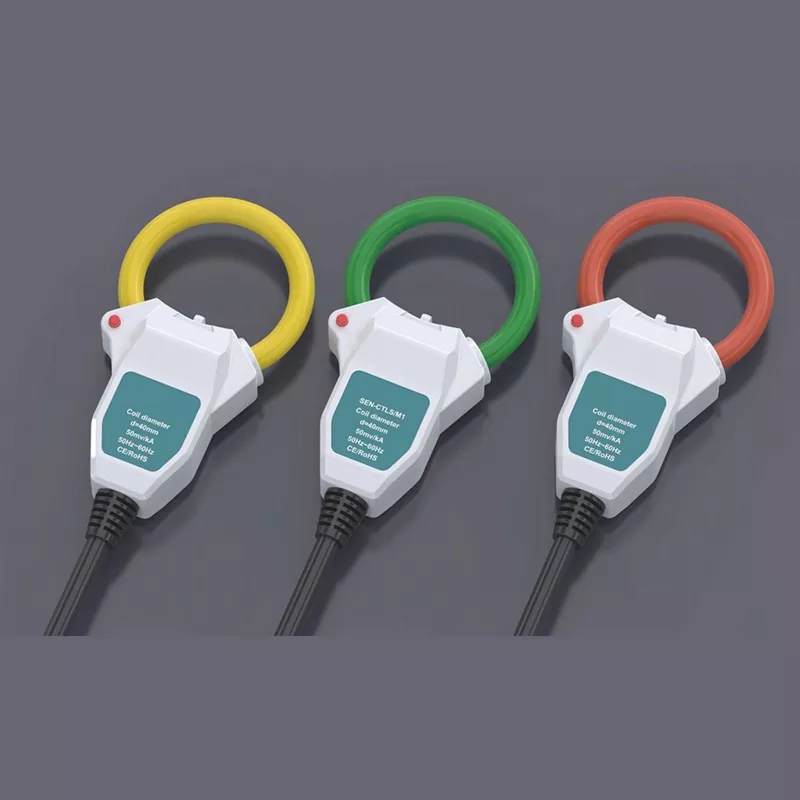
Featuring a snap-lock opening design, the transformer can be quickly installed on live low-voltage circuits without the need to disconnect busbars or cut cables; this significantly reduces retrofit time and avoids losses associated with production downtime or power outages.
The coil body is slightly flexible, allowing it to fit into tight switchgear spaces, accommodate irregular conductors, and navigate compact wiring layouts—overcoming the installation limitations associated with traditional rigid current transformers.
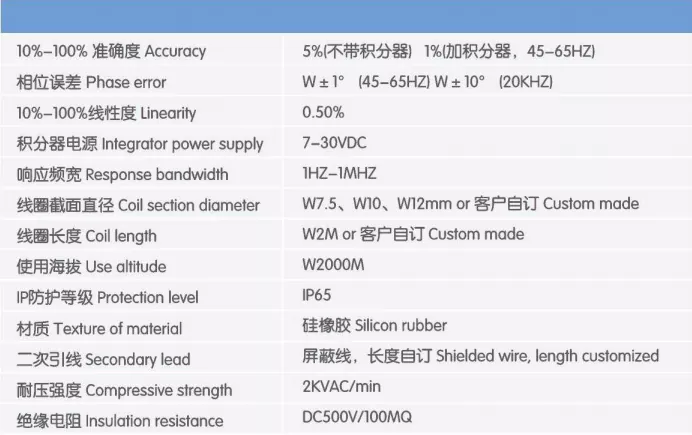
Based on the air-core coil principle, it eliminates iron-core saturation issues and maintains precise proportional output across the entire measurement range, making it suitable for both routine load monitoring and transient current detection.
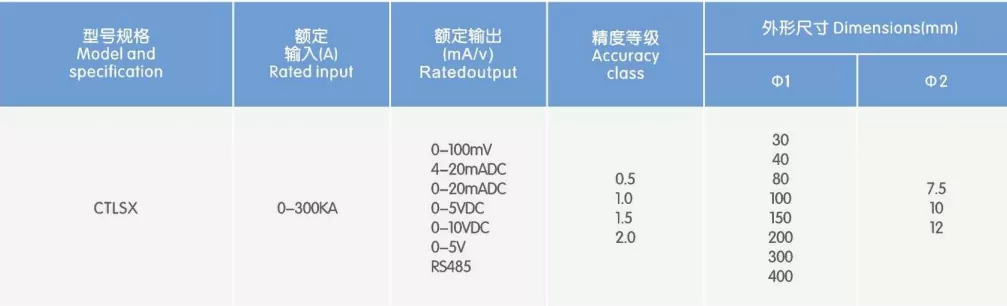
CTLSX Flexible split-core transformer can be paired with a dedicated integrator to interface directly with energy meters, power quality analyzers, PLC systems, and data acquisition units.
Equipped with a double-layer insulated flexible sheath offering excellent dielectric strength, it is suitable for low-voltage distribution systems up to 1000V; the reinforced housing ensures stable, long-term operation in industrial environments.
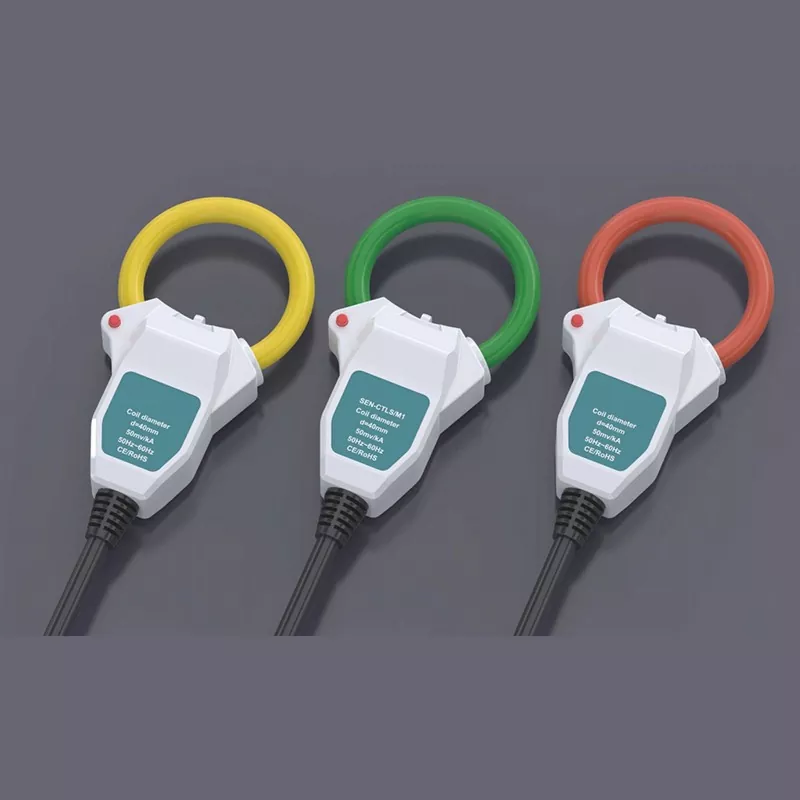
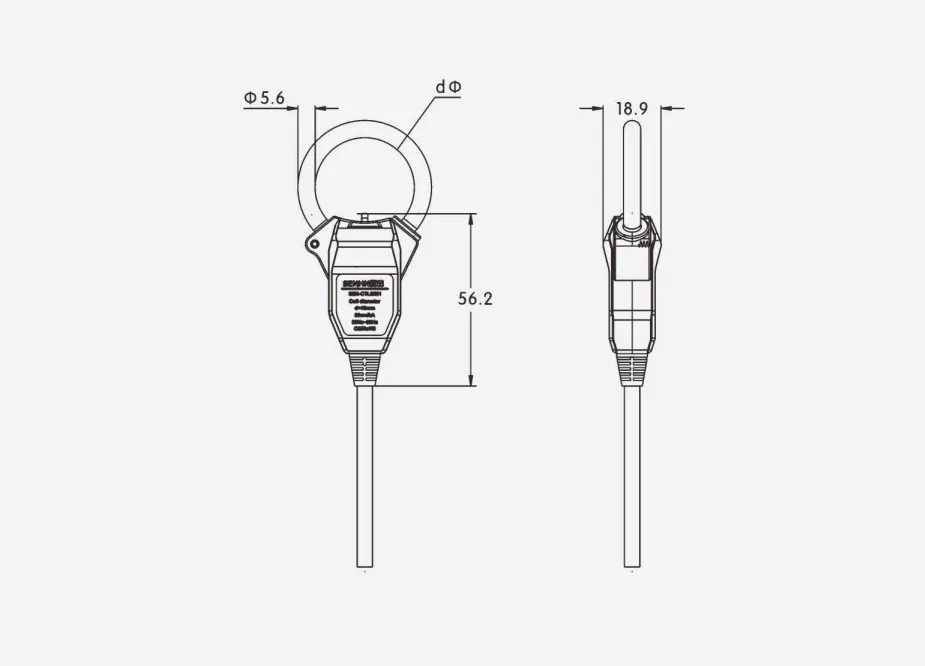
The housing is marked with key specifications—such as model number, coil diameter, sensitivity, frequency range, and certification details—facilitating on-site identification and installation management.
Reinforced ABS Housing: High-strength white engineering plastic casing that is impact-resistant and durable against aging, ensuring reliable long-term operation in industrial electrical environments.
High-Precision Winding Process: The internal coil features uniformly wound, high-purity enameled copper wire, offering low temperature drift and excellent consistency to ensure stable measurement accuracy over time.
Polarity Indication Design: A red dot on the top of the housing allows for quick polarity identification during installation, preventing incorrect wiring connections. Anti-bend cable exit structure: The cable connection point features a ribbed, anti-bend reinforcement design, making it resistant to repeated pulling and bending on-site and preventing breakage.
Permanent laser-marked label: Specifications and parameters are clearly marked on the front of the housing; the marking is wear-resistant and fade-proof, facilitating on-site installation and subsequent maintenance checks.
Building energy management: Sub-metering, energy consumption statistics, and cost allocation for commercial buildings and industrial parks.
Power quality monitoring: Harmonic analysis for distribution panels, load profiling, and transient current recording.
Industrial equipment monitoring: Current monitoring for motors, pumps, compressors, and variable-frequency drive (VFD) equipment to enable predictive maintenance.
Power distribution system retrofitting: Adding current monitoring capabilities to legacy switchgear without requiring power outages or rewiring.
New energy systems: Current detection on the output side of PV inverters and charge/discharge current monitoring for energy storage systems.
On-site commissioning and testing: Electrical acceptance testing for power distribution projects, troubleshooting, and equipment commissioning.
Safety verification: Installation involving live conductors must be performed by a certified electrician in strict compliance with local electrical safety regulations; for high-voltage scenarios, procedures for power disconnection, voltage verification, and grounding must be followed.
Opening the coil: Press the latch on the housing to separate the two ends of the flexible coil.
Wrapping the conductor: Wrap the coil completely around the single conductor being measured, ensuring the coil body is neither twisted nor overlapping.
Closing the housing: Align the mating surfaces of the coil ends and press the housing firmly shut until a "click" is heard, confirming the surfaces are fully mated.
Wiring connection: Connect the output cable to the matching integrator or measuring instrument according to the polarity markings.
Operational verification: Power on the testing equipment and confirm that the current reading is stable and matches the actual load.
Before installation, ensure the mating surfaces of the CTLSX Flexible split-core transformer are clean; foreign matter or poor contact will directly affect measurement accuracy.
Do not forcibly bend or crush the coil, and avoid piercing it with sharp objects to prevent damage to the internal windings and insulation layer.
The output terminal carries a low-voltage signal; do not short-circuit the output terminal during operation. This standard model is intended for indoor use only; outdoor installation requires placement within a waterproof distribution enclosure.
Q: Must a CTLSX Flexible split-core transformer be used with an integrator?
A: Yes. The CNJ-CTLSX outputs a millivolt-level differential voltage signal proportional to the rate of change of the current; it requires a matching integrator to convert this into a standard signal compatible with conventional meters, instruments, and PLCs. We offer a complete solution comprising both the coil and the integrator.
Q: Can this product be used for revenue-grade metering (trade settlement)?
A: The standard model (Class 0.5 accuracy) is suitable for internal energy management, sub-metering, and cost allocation. For scenarios requiring higher accuracy for revenue-grade metering, please contact us to customize a high-precision version.
Q: Can cable length and sensitivity be customized?
A: Yes. Bulk orders support customization of cable length, output sensitivity, coil diameter, and more; please contact our sales team regarding specific requirements.
Q: What is the warranty policy?
A: A one-year quality warranty applies from the date of delivery. Under normal operating conditions, we provide free replacement or repair services for quality issues related to materials or workmanship, as well as lifetime technical support.
Project Name: Chengdu Data Center Tier III+ Server Room Cabinet Branch Circuit Energy Metering Retrofit
Location: Tianfu Digital Economy Industrial Park, Tianfu New Area, Chengdu, Sichuan Province
Retrofit Completion Date: June 2025
Product Used: CNJ-CTLSX Flexible Split-Core Rogowski Coil (50mV/kA, Class 0.5)
This IDC facility serves as a core cloud service node for the Southwest region. Built to Tier III+ standards, it houses 480 standard server cabinets and requires a power availability of 99.982%. To meet computing energy efficiency assessment requirements and enable accurate billing based on actual tenant power consumption, the facility plans to install current acquisition devices on the cabinet branch circuits within all row-end cabinets, thereby achieving cabinet-level sub-metering of energy consumption.
As the data center hosts core operations for numerous government and enterprise clients, unplanned power outages are strictly prohibited; consequently, retrofit solutions requiring the disconnection of cables and power shutdowns—typical of traditional solid-core or standard split-core current transformers—were entirely unfeasible. Furthermore, the high density of cable layouts within the power distribution cabinets left insufficient space for installing rigid current transformers. After evaluating multiple options, the project selected the CNJ-CTLSX flexible split-core Rogowski coil as the core component for current sensing, enabling the retrofit of all branch circuits with zero downtime.
1. Strict Data Center Classification; Power-Down Retrofitting Unfeasible: Tier III+ IDC facilities operate under rigorous Service Level Agreements (SLAs). Unplanned outages incur substantial penalties—exceeding 100,000 RMB per hour—payable to clients. Traditional current transformers require cutting cables and shutting down power during installation, rendering such solutions non-compliant and immediately rejected.
2. Metering Limited to Main Cabinets; Inability to Achieve Precise Rack-Level Billing: The original power distribution system only metered the main incoming line of the distribution cabinet. Tenant electricity costs were allocated based on rack footprint, causing high-power-density clients to consistently bear disproportionate costs and leading to frequent billing disputes. Additionally, the lack of precise energy efficiency data for individual racks hindered PUE optimization efforts.
3. High-Density Internal Cabling; Installation Constraints for Rigid Transformers: Branch cables within the distribution cabinets were spaced less than 2 cm apart. Traditional rigid split-core transformers are bulky and require significant clearance for opening and closing, making installation impossible given the existing cable layout. Reorganizing the cables would have drastically increased the workload and the risk of power outages.
4. Stringent Electromagnetic Compatibility (EMC) Requirements: Standard iron-core transformers exhibit high magnetic leakage, which can interfere with the stable operation of servers, storage devices, and network switches, potentially causing data errors or system reboots. Retrofit equipment had to comply with the strict EMC standards required for IDC facilities.
To address the core requirements of IDC facilities—specifically "zero downtime, compact space, high precision, and strict EMC standards"—the project utilizes CNJ-CTLSX flexible split-core Rogowski coils paired with dedicated DIN-rail integrators. These convert signals for integration into the facility's environmental monitoring system, enabling real-time data acquisition of current and energy consumption across all branch circuits.
Core Design Principles
Split-core, no-disconnect installation: Featuring a snap-on split design, the coils clip directly onto the cables. Certified electricians perform the installation in accordance with low-voltage live-working protocols; no power outages or terminal disconnections are required at any stage.
Flexible coils for tight spaces: Constructed from flexible insulating material, the coils can be slightly bent or reshaped, allowing for easy installation around cables even in densely packed cabinets with minimal spacing.
Seamless signal integration: Dedicated integrators convert differential signals into standard electrical signals for direct connection to the existing monitoring platform. This eliminates the need to replace the host system, keeping retrofit costs manageable.
Low-EMR shielding design: An external shielding layer minimizes magnetic flux leakage—far below that of traditional iron-core transformers—ensuring compliance with IDC electromagnetic compatibility (EMC) standards and preventing interference with the stable operation of IT equipment.
Flame-retardant, high-temperature resistant materials: The housing is made of V0-rated flame-retardant engineering plastic, designed to withstand the sustained temperature rise typical of enclosed server room environments and compliant with fire safety regulations.
Zero-downtime installation process; zero impact on business operations and zero liability payouts: All 144 units were installed and commissioned while the systems remained live. Throughout the installation, the power supply system triggered no alarms and experienced no interruptions; all client services continued to operate normally, fully meeting SLA requirements and avoiding a projected liability risk exceeding RMB 800,000 associated with potential downtime. Highly adaptable to tight spaces; installation efficiency increased by 120% The flexible coils are compact and pliable, allowing for easy installation even in crowded cabinets where cable spacing is less than 2 cm. The average installation time per unit is just 3 minutes—a 120% efficiency gain over traditional rigid current transformers—enabling the installation and commissioning of all 144 units across the project in only two days.
Compliant metering accuracy supports commercial billing The devices feature Class 0.5 measurement accuracy and excellent linearity across the full measurement range. Aggregated branch circuit data shows a deviation of ≤1.8% compared to the main meter in the row-end cabinet. Verified by a third-party metrology agency, the data serves directly as the basis for tenant electricity billing, effectively resolving long-standing billing disputes.
Electromagnetic compatibility ensures no interference with IT equipment Following installation, servers and switches in the affected cabinets were monitored during 72 hours of continuous operation; no electromagnetic interference—such as data errors, reboots, or alarms—occurred. Electromagnetic radiation levels fully comply with IDC operational standards.
Coreless design eliminates maintenance needs and lowers long-term O&M costs Utilizing an air-core design, the Rogowski coils are free from iron-core saturation, mechanical wear, and hysteresis loss. They require no periodic calibration after deployment—only a visual inspection during annual checks—significantly reducing the workload and cost of data center operations and maintenance.
Cabinet-level precision billing achieved; tenant satisfaction significantly improved Real-time and monthly power consumption for each cabinet can be accurately tracked, enabling transparent "pay-for-what-you-use" billing. Complaints from high-power-consuming tenants dropped to zero, and the overall tenant renewal rate increased by 15%.
Supports granular PUE optimization; annual electricity savings exceed 300,000 kWh Granular data on branch circuit energy consumption identified three clusters of high-energy-consuming cabinets. Targeted optimizations were implemented for air conditioning airflow strategies and server load scheduling. The facility's overall PUE dropped from 1.42 to 1.38, resulting in annual electricity cost savings of over 300,000 RMB, with the retrofit investment recovered within 10 months. Early Warning for Branch Circuit Faults & Enhanced Power Reliability: The system monitors branch circuit currents in real-time and successfully identified potential issues—specifically current fluctuations caused by poor terminal contact—in two branch circuits. Maintenance personnel rectified these issues during off-peak hours, thereby averting two potential downtime incidents.
Long-term Stable Operation with 100% Equipment Integrity: As of July 2026, 144 units have operated stably for 13 consecutive months without a single instance of accuracy drift, signal interruption, or casing degradation. The equipment integrity rate stands at 100%, with operational performance exceeding project expectations.
The CNJ-CTLSX flexible split-core Rogowski coil is ideally suited for power distribution upgrades in IDC data centers, which demand zero downtime, high compactness, high precision, and strict EMC compliance. It fundamentally resolves the compliance and installation challenges associated with retrofitting traditional current transformers. Capable of rapidly establishing a granular branch-level energy monitoring system with minimal installation costs and operational disruption, it represents a highly cost-effective current sensing solution for data center energy efficiency upgrades and intelligent power distribution retrofitting.
Address
No. 318, Weidian Road, Economic Development Zone, Yueqing City, Zhejiang Province, China
Tel