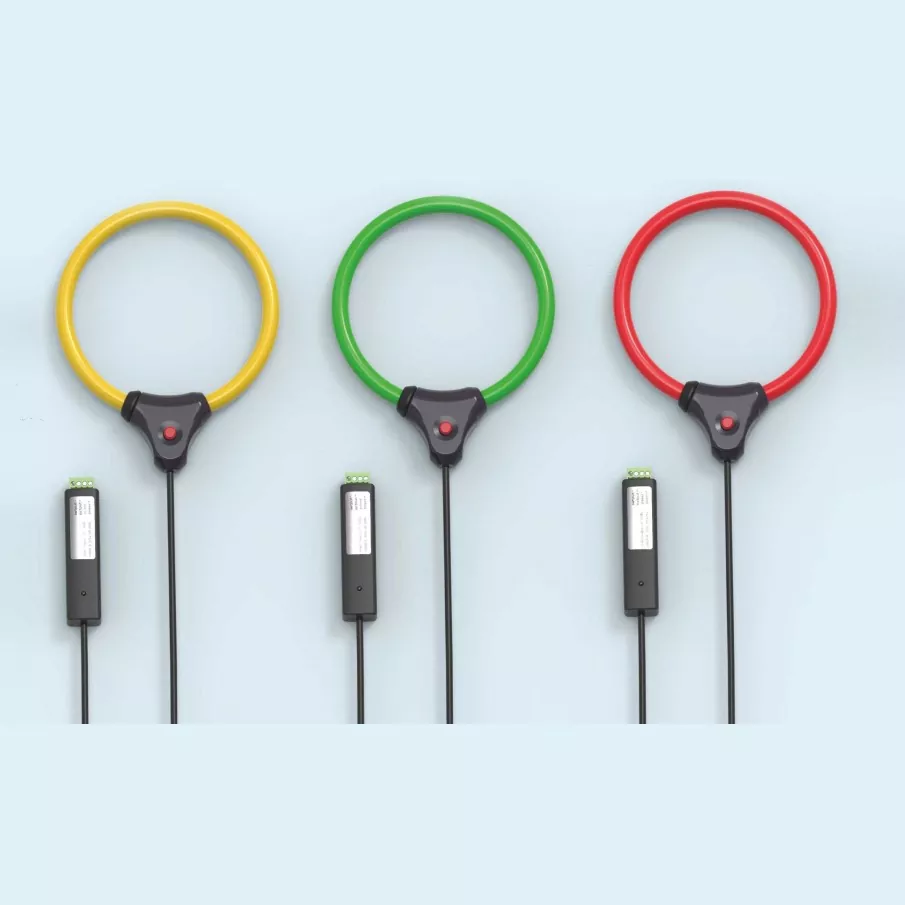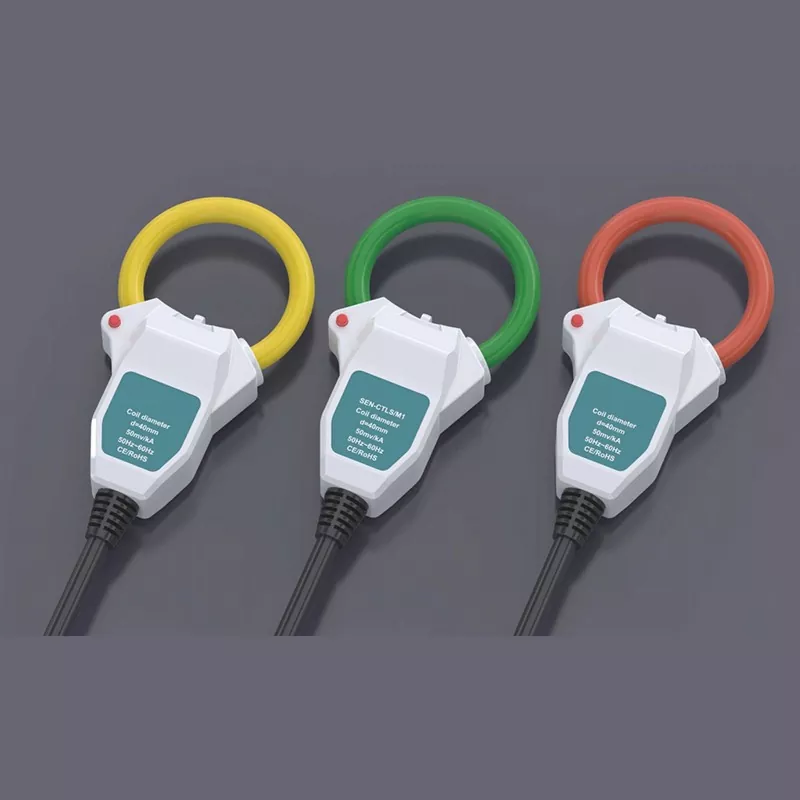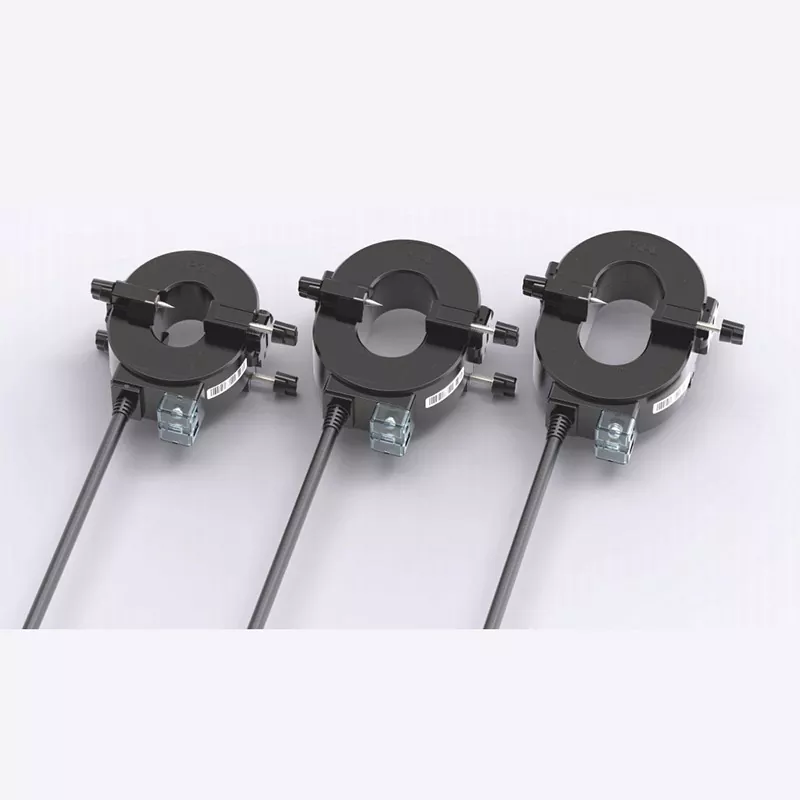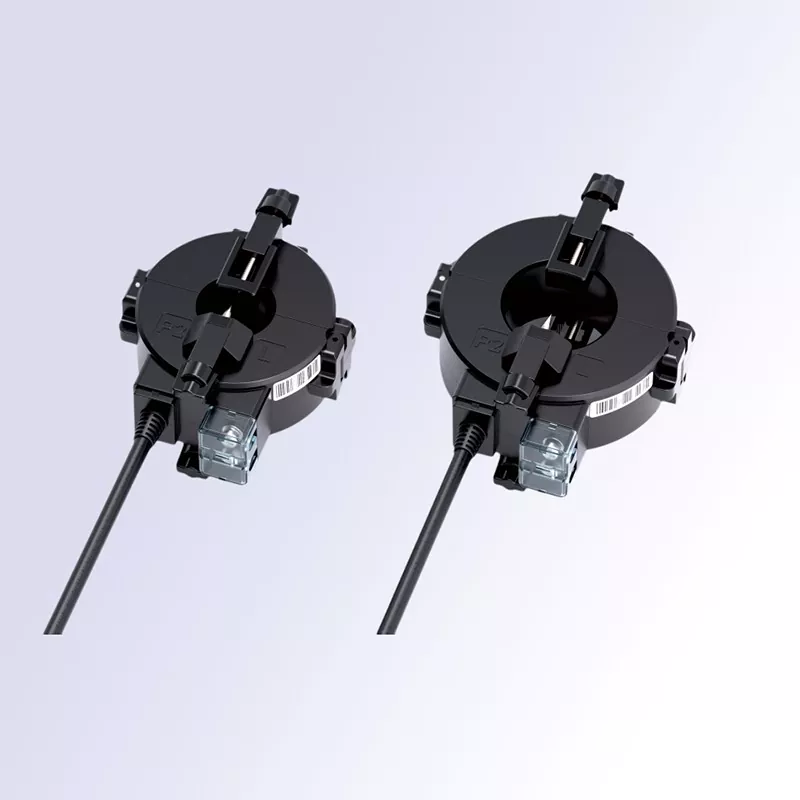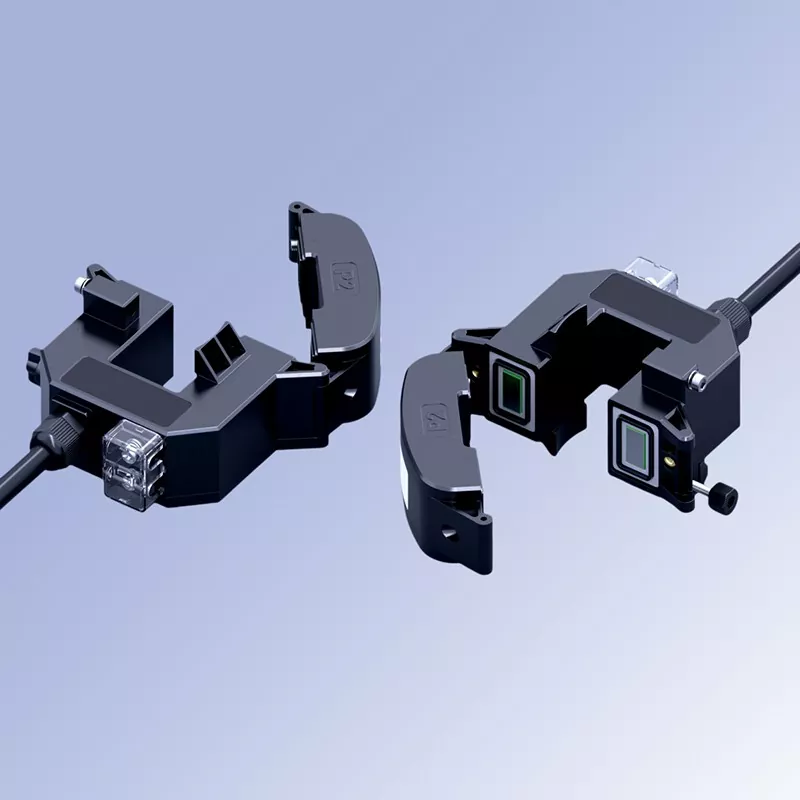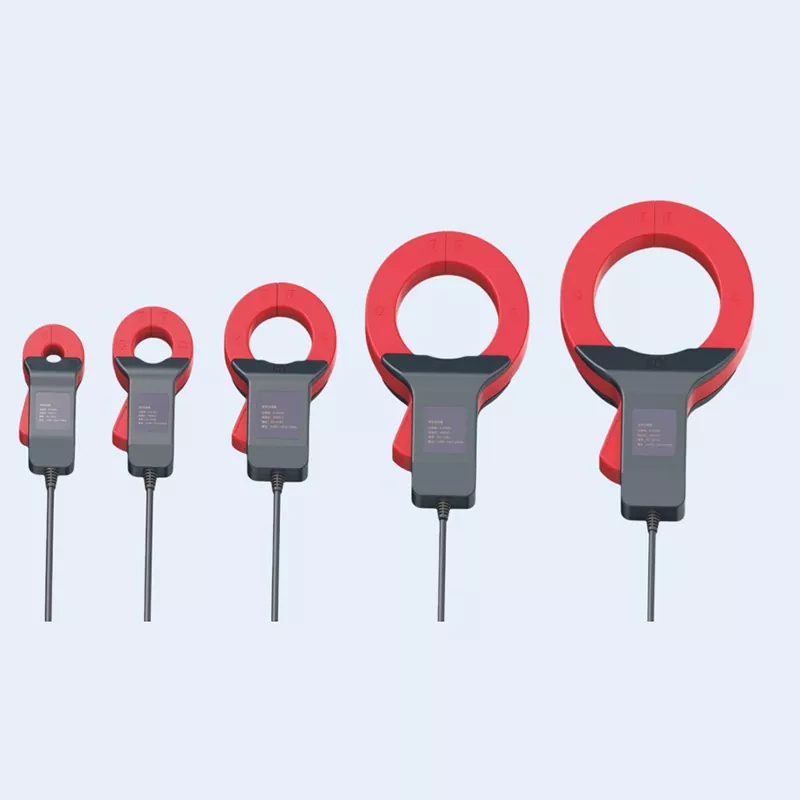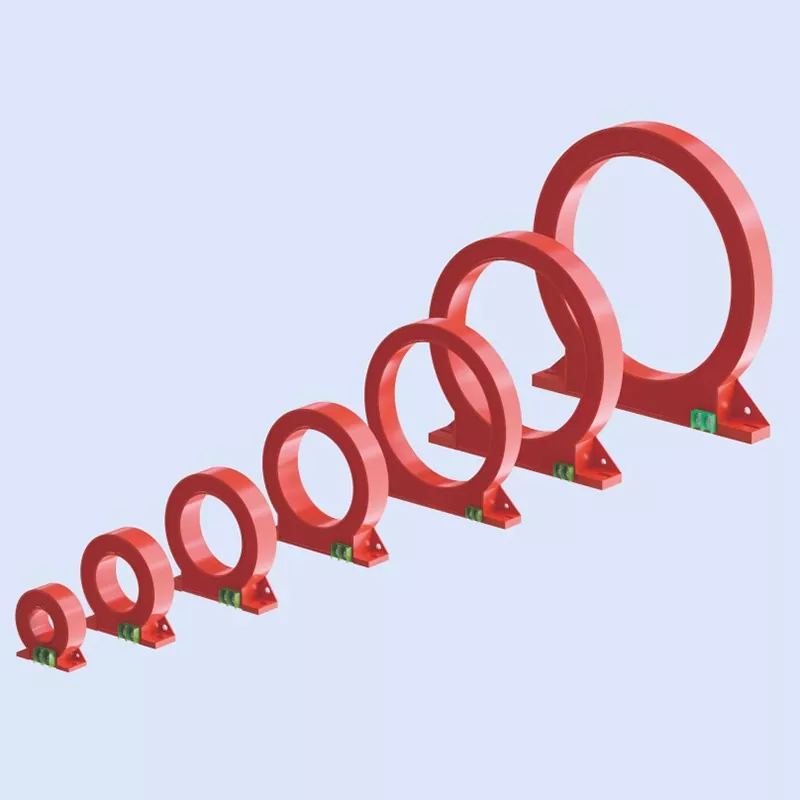

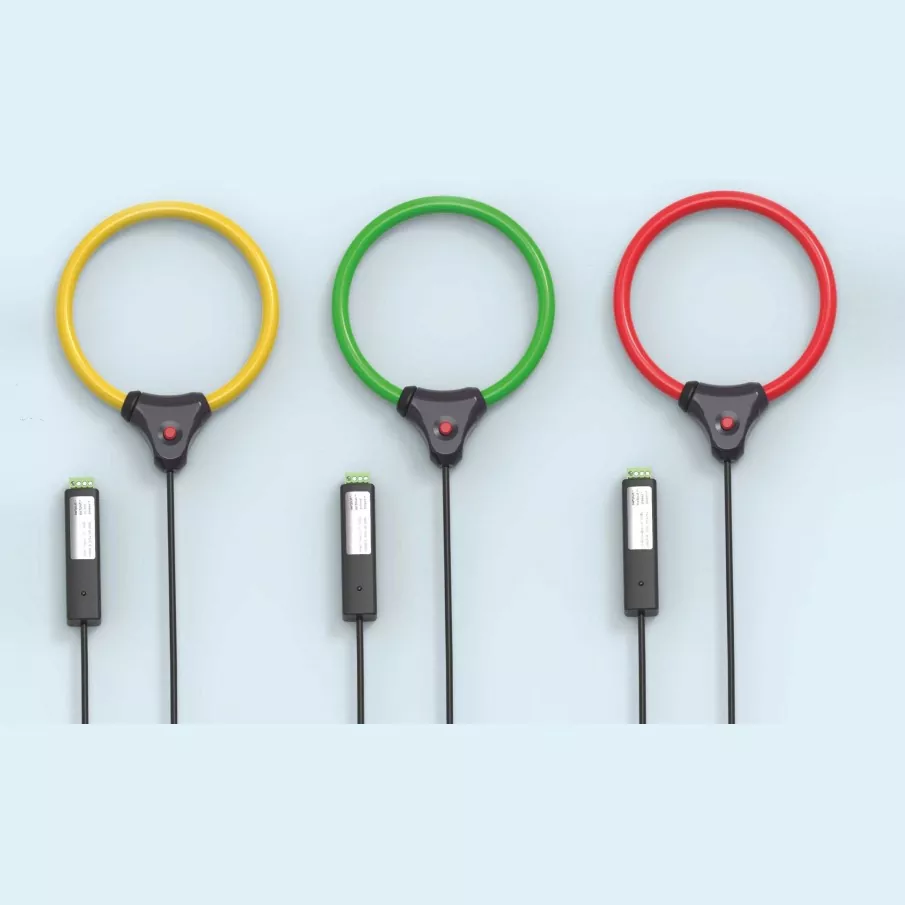
Featuring a flexible insulated coil structure, it can be easily bent and wrapped around the conductor under test, enabling rapid current sampling without the need to dismantle existing circuits or shut down power (when operated in compliance with low-voltage safety protocols). When paired with a dedicated integrator, it outputs standard current or voltage signals, allowing for direct connection to devices such as energy meters, waveform recorders, online monitoring systems, and PLCs.
Compared to traditional rigid current transformers, this flexible split-core transformer is lightweight, highly adaptable, and cost-effective to install. It is particularly suitable for scenarios where traditional transformers cannot be fitted—such as irregularly shaped busbars, large-diameter cables, and confined cabinet spaces—making it a preferred tool for industrial power distribution, electrical testing, and the maintenance of new energy power plants.
1. Flexible and Bendable
The coil body features a flexible insulating sheath that allows it to be bent and wrapped freely around various conductors—including round cables, rectangular busbars, irregular shapes, and large-diameter bus lines. It overcomes installation space and conductor shape limitations, solving the installation challenges associated with traditional rigid transformers.
2. Openable Structure
It utilizes a mating open-close design, eliminating the need to cut cables or dismantle busbars. In low-voltage scenarios, certified electricians can install it while the system is live, significantly shortening retrofit timelines and avoiding losses caused by production stoppages or power outages. It is ideal for upgrading and retrofitting aging power distribution systems.
3. Wide Measurement Range
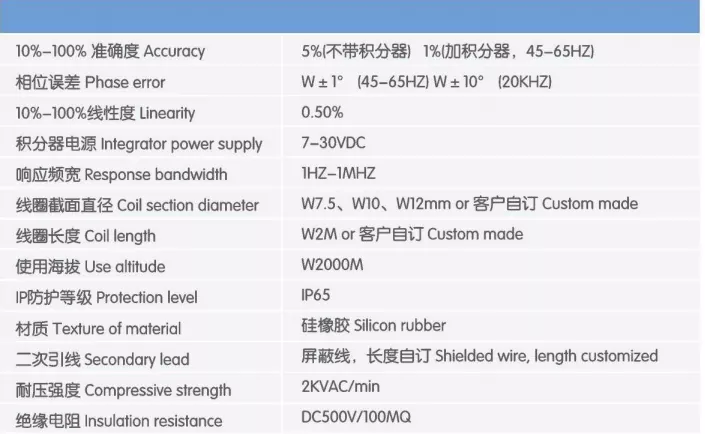
It supports AC current measurements ranging from tens of amperes to tens of thousands of amperes. With excellent linearity and no risk of iron-core magnetic saturation, it provides stable measurements of power-frequency current, harmonic current, transient pulse current, and lightning surge current, meeting the dual requirements of standard metering and specialized testing.
4. Matching Integrator
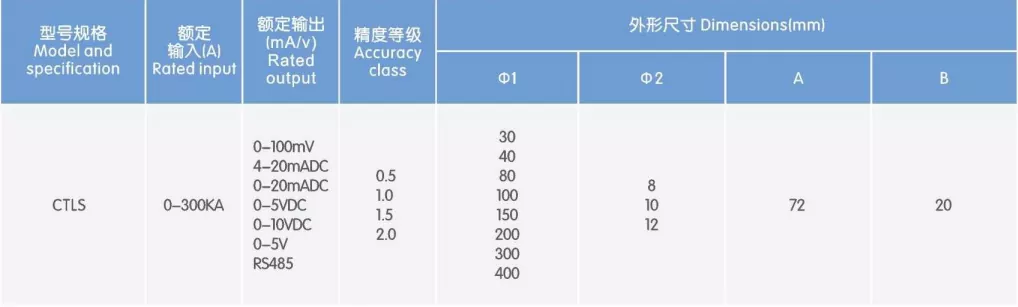
Comes standard with a dedicated integration module that converts the coil's differential output signal into a standard 5A/1A current signal or 0-5V/4-20mA voltage signal. It connects directly to various measuring instruments, monitoring systems, and integrated protection devices without requiring additional calibration.
5. Excellent Insulation Performance
The coil utilizes a dual-layer insulation process, offering high dielectric strength and resistance to high voltage and humidity, making it suitable for indoor industrial power distribution environments. The connector features a precision interface that ensures a stable magnetic circuit closure, resulting in accurate and reliable measurement data.
6. Lightweight and Portable
The flexible split-core transformer weighs significantly less than traditional transformers of the same rating. It can be carried and operated by a single person, and on-site installation requires no heavy machinery, drastically reducing labor and time costs.
Power Systems: Substations, power distribution rooms (fault recording, transient current detection, harmonic analysis, line inspection).
Industrial Manufacturing: Online high-current monitoring for large motors, transformers, and rectifiers in metallurgy, chemical processing, and mining.
New Energy: PV power plants, energy storage stations, AC high-current acquisition for wind power grid connection, and fault current recording.
Power Distribution Retrofitting: Retrofitting current monitoring on legacy switchgear and busbar trunking systems without power interruption; energy management system upgrades.
Testing & Inspection: Electrical equipment temperature rise tests, short-circuit tests, lightning surge tests, and factory calibration.
Municipal Infrastructure: Power distribution O&M and troubleshooting for rail transit, data centers, and large commercial complexes.
Before starting work, verify the voltage level of the circuit to be measured. For high-voltage operations, strictly follow power-off and voltage-verification procedures; low-voltage live work must be performed by certified electricians using proper insulation protection.
Open the coil connector, wrap the flexible coil completely around the conductor being measured, and ensure there are no twists or overlaps. Then, fasten the connector securely, ensuring the mating surfaces fit together perfectly.
Connect the coil output leads to the corresponding terminals on the integrator according to the markings, paying attention to correct polarity (positive/negative).
Connect the power supply to the integrator and link the integrator's output to the measuring instrument, data acquisition terminal, or other equipment. After verifying that all wiring is correct, power on the measuring equipment and confirm that the data display is normal; the installation is then complete.
The flexible split-core transformer is suitable only for AC current measurement; it must not be used for DC constant current detection.
When installing the coil, ensure the mating surfaces are clean and free of debris, and that the coil is fully latched in place; failure to do so will affect measurement accuracy.
Do not excessively bend or crush the coil; avoid scratching the insulation sheath with sharp objects to prevent insulation damage and associated safety hazards.
The secondary side of the Rogowski coil provides a voltage output; short-circuiting is strictly prohibited. Wire the accompanying integrator according to specifications to avoid damage caused by incorrect polarity.
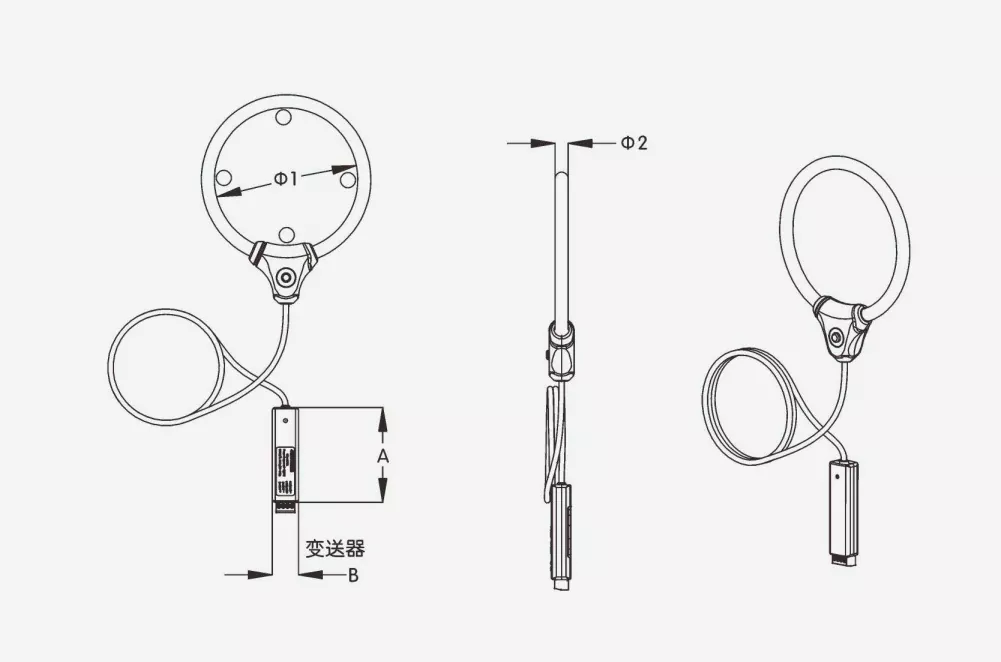
Flexible Coil Body: Wound using high-toughness, multi-strand enameled wire and encased in a flame-retardant, flexible insulation sheath; resistant to bending and aging, and adaptable to complex installation angles.
Precision Mating Connector: High-strength engineering plastic housing with a built-in precision locking mechanism; ensures a tight fit with low magnetic reluctance; features a convenient push-to-lock design.
Dedicated Integrator Module: Uses an industrial-grade signal processing chip offering low temperature drift and high stability; includes a power indicator light and clearly labeled terminals to minimize wiring errors.
Reinforced Cable Design: Connection cables between the coil and integrator are reinforced against bending and pulling; resistant to tension and aging, making them suitable for complex on-site wiring environments.
Q1: What is the difference between a Rogowski coil and a standard current transformer?
A: Standard current transformers rely on an iron core magnetic circuit and are prone to magnetic saturation; they typically feature a rigid, fixed structure requiring circuit disconnection for installation. In contrast, the Rogowski coil features a hollow, flexible structure that is immune to magnetic saturation, offers a wide measurement range, and allows for open-and-close installation, making it ideal for high-current applications, retrofit projects, and specialized installation scenarios.
Q2: Can the flexible split-core transformer be used for energy metering?
A: Standard Class 0.5 products are suitable for general energy consumption and current monitoring. For high-precision metering applications involving trade settlement, a Class 0.2 high-precision version can be customized; please specify this requirement in advance.
Q3: Can it be used inside high-voltage switchgear? A: Yes, but you must select a coil with an insulation rating appropriate for the system voltage level; additionally, installation and operation must be performed by qualified personnel in strict accordance with safety regulations for high-voltage work.
Q4: Can the coil be purchased separately, without the integrator?
A: Yes, coils or integrators can be purchased individually; however, please verify interface and signal compatibility requirements with your existing equipment before placing an order. Special Power Quality Testing Project for the Stamping Workshop of a Vehicle Manufacturing Base in Ningbo Hangzhou Bay New Area
Project Name: Inrush Current Detection and Special Power Quality Testing for the Stamping Workshop of an Indigenous-Brand Vehicle Manufacturing Base in Ningbo Hangzhou Bay New Area
Location: Vehicle Manufacturing Industrial Park, Hangzhou Bay New Area, Ningbo City, Zhejiang Province
Implementation Date: September 2024
Products Used: Three-phase flexible split-core Rogowski coil set (color-coded yellow/green/red; equipped with dedicated external integrators)
The stamping workshop is equipped with four large-scale 2,000-ton mechanical presses, representing typical heavy-duty impulse loads. Each main motor has a rated power of 250 kW, and the peak current during the stamping stroke can exceed six times the rated current. In early 2024, the workshop experienced frequent issues, including abnormal temperature rise in low-voltage busbar trunking, contactor ablation in reactive power compensation cabinets, and error alerts on nearby precision dimensional inspection equipment caused by interference. The owner commissioned a third-party power testing agency to conduct comprehensive power quality testing across all operating conditions to accurately capture inrush current waveforms and harmonic data, thereby providing the necessary data to support subsequent power quality mitigation strategies.
Complex impulse load conditions; traditional transformers unable to capture transient signals
Conventional iron-core current transformers suffer from high hysteresis and narrow measurement bandwidth; they can only capture steady-state power-frequency currents. They are unable to accurately capture millisecond-level stamping inrush current waveforms or precisely measure high-order harmonic content, rendering the test data insufficient for root-cause analysis of faults.
Difficulty in disconnecting large-cross-section busbars; power-off testing entails massive production losses
The workshop's main incoming power line consists of rectangular copper busbars (specifications: 3×120×10 mm). Installing traditional window-type (through-hole) transformers would require dismantling the busbars and disconnecting the power lines. It was estimated that a 12-hour power outage per production line would result in direct production losses exceeding one million RMB—an outcome completely unacceptable to the owner.
Limited space inside the cabinet; installation of rigid testing equipment is constrained Inside power distribution cabinets, the spacing between busbars is narrow and the surrounding circuit breakers and terminal blocks are densely packed. Rigid, clamp-on current transformers are bulky and require significant operating space, making them difficult to install properly and complicating test deployment.
High demands for multi-channel synchronous testing; signal consistency is difficult to ensure.
Accurate analysis of phase imbalance and phase difference requires synchronous acquisition of three-phase currents. Traditional split-type test probes often suffer from significant variations in winding parameters and high integration errors, leading to poor data synchronization across phases—factors that directly compromise the accuracy of power quality analysis results.
To meet industrial site requirements for "live testing, broad compatibility, high precision, and wide bandwidth," the project utilizes a three-phase set of flexible, clamp-on Rogowski coils paired with an external, dedicated integrator. This setup outputs a standard signal to a portable power quality analyzer, enabling continuous 72-hour testing across all operating conditions.
Core Solution Design
Flexible Clamp-on Structure: The coils are pliable and can be bent or shaped to wrap directly around rectangular busbars. Installation can be performed on live circuits following standard safety procedures, eliminating the need to dismantle busbars or shut down power.
High-Precision Split-Type Integrator: An external integration module performs precise integration calculations, converting the coil's differential signal into a standard voltage signal that is directly compatible with the input interfaces of mainstream power quality analyzers.
Wide-Bandwidth Measurement Capability: The effective measurement frequency range covers 5 Hz to 1 kHz, allowing for the accurate capture of transient surge currents and harmonics (2nd through 25th orders), fully complying with power quality testing standards.
Color-Coded Design: Yellow, green, and red coils correspond to the three phases, minimizing wiring errors on-site and significantly improving both testing efficiency and phase data accuracy.
Rapid deployment with zero downtime; no impact on normal production. The flexible coils feature a snap-lock design, allowing them to be clamped directly around busbars. Certified electricians perform the installation according to low-voltage live-work protocols, requiring no power outages or disassembly of distribution components. Deploying a single three-phase set takes only 15 minutes, allowing the workshop production line to operate normally throughout the test with zero loss in output.
Flexible adaptability to irregularly shaped conductors; easy installation in confined spaces. The flexible coil body conforms perfectly to the contours of rectangular copper busbars, allowing for easy installation even in cramped cabinets with high component density and limited working space; this fundamentally solves the industry challenge where rigid current transformers fail to fit irregular conductors or tight environments.
Featuring a wide bandwidth and high precision, the device—when paired with a dedicated integrator—offers excellent measurement linearity and flat frequency response characteristics. It accurately captures millisecond-level peak impulse currents and complete waveforms during stamping operations and precisely measures harmonic content. With a measurement error of ≤0.5%, it fully meets the accuracy requirements for professional power quality testing.
Excellent three-phase consistency ensures reliable synchronous test data. The coils are manufactured using a unified winding process, and integrator parameters are strictly matched and calibrated. The synchronization error between the three phases is less than 1ms, allowing for the precise reconstruction of phase differences and current unbalance, thereby ensuring the scientific validity and accuracy of power quality analysis results.
Portable and durable for repeated use across multiple scenarios. The entire system is lightweight and easy to carry, featuring a robust opening/closing mechanism designed for frequent operation. It is ideal for use by third-party testing agencies across various industrial sites and circuit specifications. Its high reusability results in a total cost of ownership far lower than that of traditional testing methods.
Pinpointing the root cause of faults: Through continuous 72-hour testing under full operating conditions, the system accurately captured a peak current of 1860A (approximately 6.2 times the rated value) during the press's stamping stroke. It also identified that the 5th and 7th harmonic levels exceeded limits by 12% and 8%, respectively, thereby clarifying the root causes of busbar overheating, contactor ablation, and interference with precision equipment.
Supporting the implementation of effective mitigation solutions: Based on the precise test data, the client installed Active Power Filters (APF) and dynamic reactive power compensation devices. Following the retrofit, the average temperature rise of the busbars dropped by 12°C, the failure rate due to contactor ablation fell by 85%, and interference-related error issues in precision testing equipment were completely resolved.
Significantly reducing total testing costs: Compared to traditional testing methods requiring power outages, this live-testing approach avoided approximately 1.2 million RMB in lost production capacity. Additionally, labor costs for testing were reduced by 60%, and the testing cycle was shortened from... The testing duration was reduced from three days to half a day, demonstrating significant advantages in efficiency and cost-effectiveness.
The value of the equipment's reusability was fully realized; the system was subsequently deployed for multiple rounds of power quality inspections in the facility's welding and final assembly workshops. It successfully completed testing at 12 locations with a 100% operational rate and consistently stable measurement accuracy, establishing itself as a core, standard tool for the facility's O&M inspections.
The three-phase flexible split-core Rogowski coil with an external integrator is a specialized, core tool for industrial power quality testing, high-current transient detection, and power distribution fault troubleshooting. It effectively resolves three major pain points associated with traditional testing equipment: the requirement for power outages, poor adaptability, and inaccurate transient measurements. It meets the professional needs of third-party testing agencies for portable, reusable equipment while also suiting the diverse scenarios—ranging from ad-hoc testing to online monitoring—encountered by industrial enterprises. Ultimately, it provides precise, reliable data to support fault diagnosis, energy efficiency optimization, and power quality management within power distribution systems.
Address
No. 318, Weidian Road, Economic Development Zone, Yueqing City, Zhejiang Province, China
Tel