
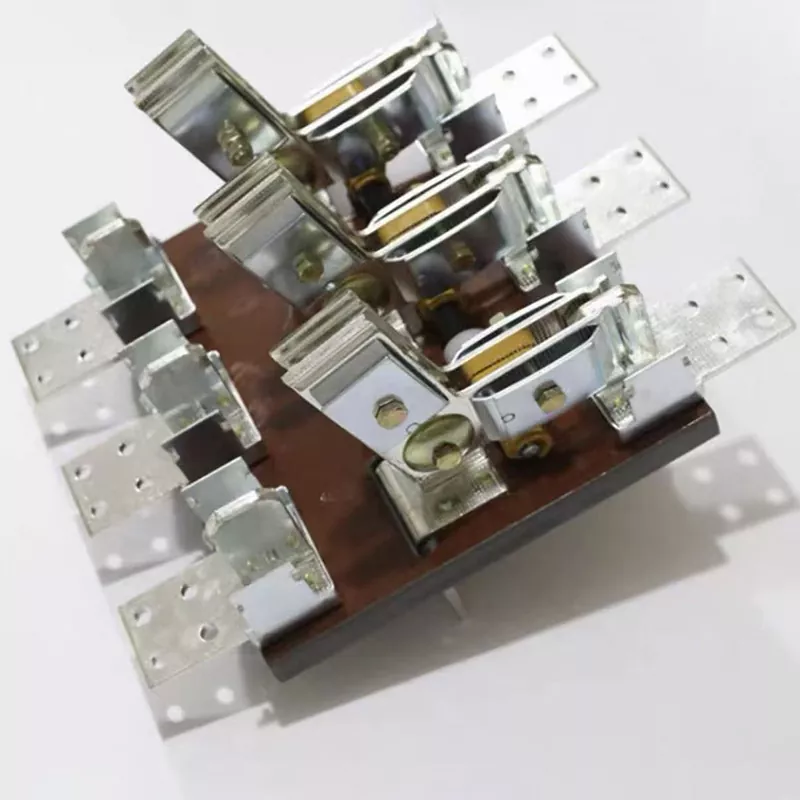
Are you struggling to choose a switch for high-current low-voltage circuits? Using circuit breakers is too costly, and for circuits that are rarely isolated once a year, the complex electronic trip devices are actually potential fault hazards; while using old-style knife switches without arc suppression covers, it is strictly prohibited to operate under load. Once an error is made, an arc flash short circuit accident will occur.
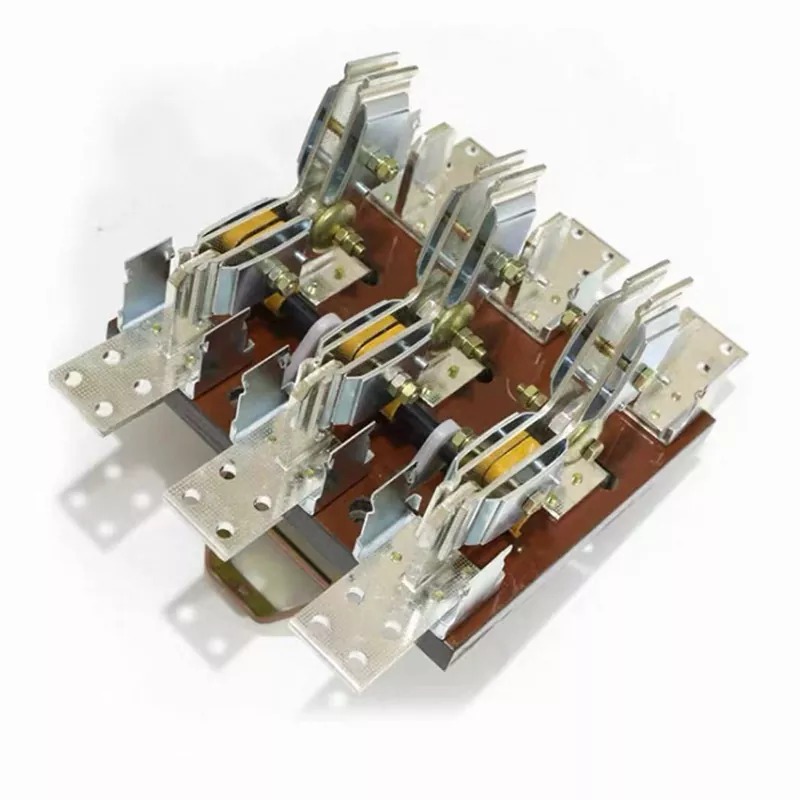
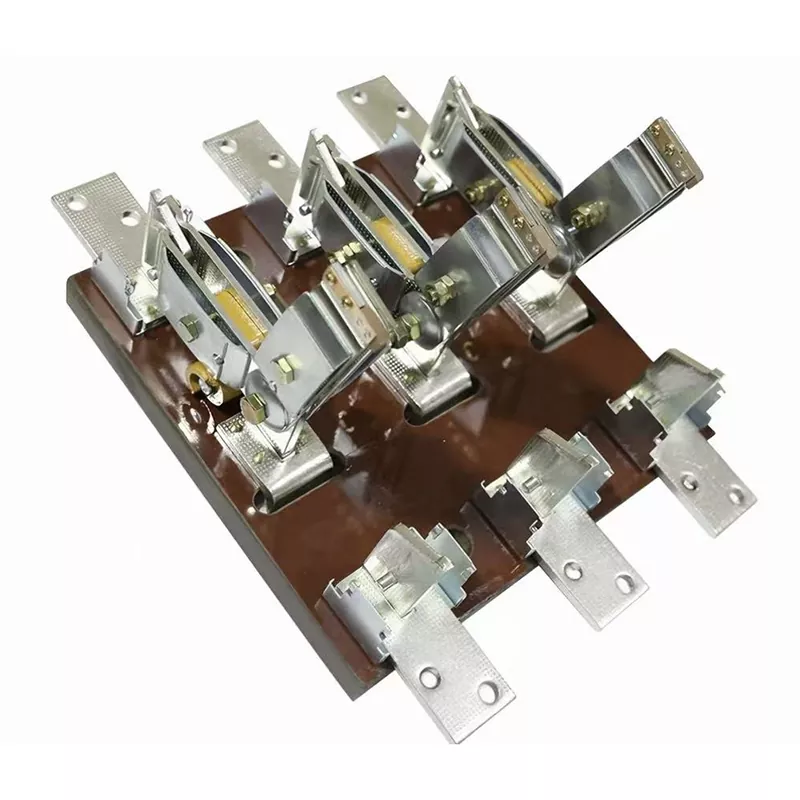
Junray Electrical's Low Voltage Knife Switch has made key upgrades based on the traditional knife switch - adding a dedicated arc suppression cover. This improvement enables it to have the ability to interrupt normal load currents, completely changing the limitation of ordinary knife switches that can only "isolate without load". It gives you the safety of circuit breakers when you need to cut off high-current circuits, while retaining the low cost and intuitive break point of knife switches, perfectly resolving the contradiction between "using too big a tool for a small job" and "operational risks".
The core competitiveness of Low Voltage Knife Switch lies in its powerful current-carrying capacity and intuitive mechanical structure:
4000A super high current carrying capacity: This is an area that ordinary plastic housing circuit breakers cannot reach. Our knife switch has a rated current range of 100A to 4000A, which can easily meet the requirements for ultra-high current low-voltage power distribution in factories, metallurgy, chemical industries, etc. For the isolation of main lines, it is undoubtedly the "big guy".
With arc extinguishing cover and loadable operation: Equipped with a specially designed clay arc extinguishing cover, using the grid arc extinguishing principle, it can quickly cool and extinguish the arc generated during the opening. This means that you can safely open and close normal load currents without worrying about arc burn damage to the contacts, greatly enhancing the safety and convenience of operation.
Minimal structure, zero failure rate: Abandoning complex springs, connecting rods and electronic components, it adopts the purest mechanical lever structure. This "dumbbell-style" design brings an extremely low failure rate, almost no maintenance required, and is particularly suitable for isolation scenarios installed in cabinets that are operated only once every few years, truly achieving "just install and don't worry about it anymore".
As a professional Manufacturer with extensive manufacturing experience, Junray Electrical strictly follows the national standards for HD13 low-voltage knife switches in its production. We are well aware of the strict requirements for conductivity and insulation in high currents, and therefore do not compromise in the selection of materials.
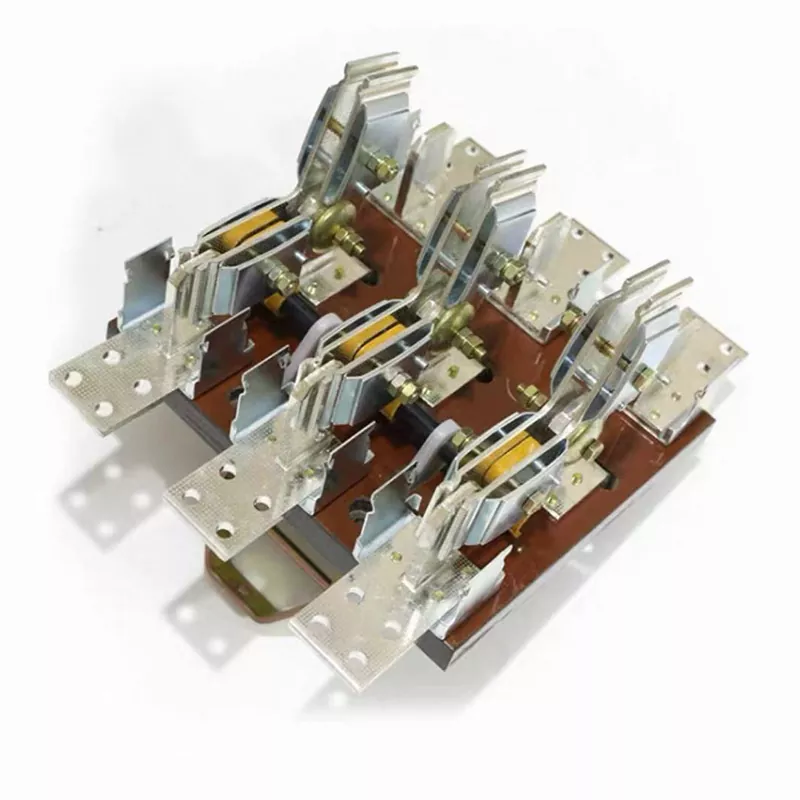
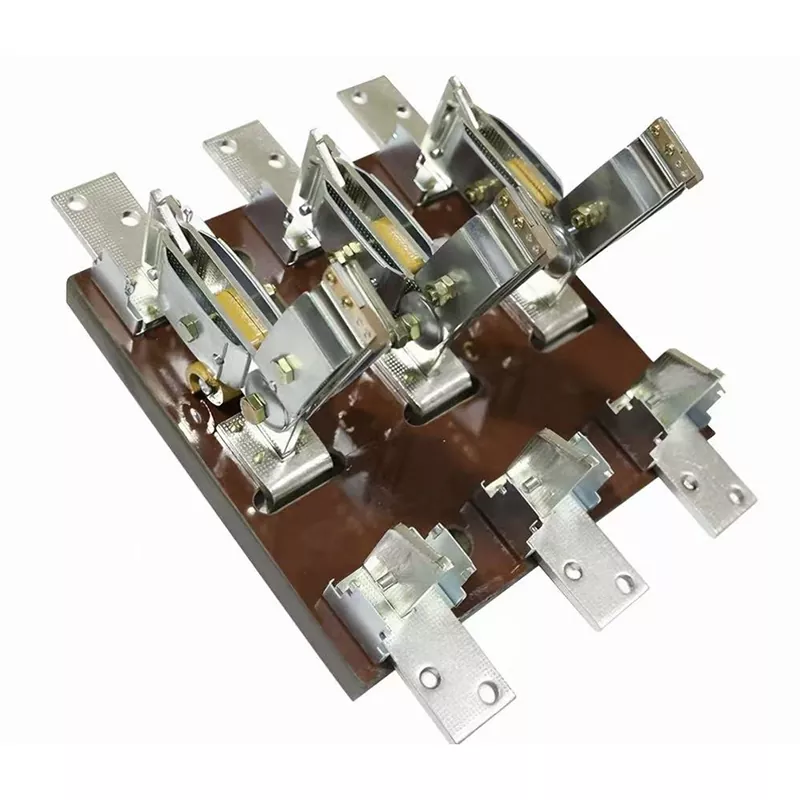
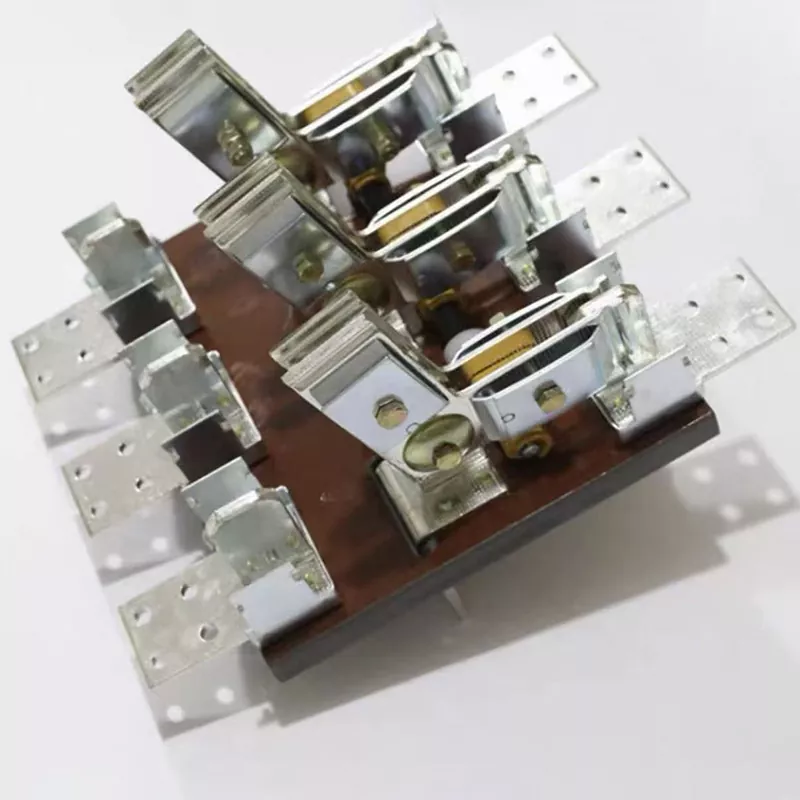
The conductive components of this Low Voltage Knife Switch are made of high-quality copper knife contacts, with low resistance and excellent conductivity. They generate very little heat during high-current operation and are highly wear-resistant. The insulating base plate is made of high-strength glass fiber pressed plastic, which has excellent insulation properties and flame retardancy, ensuring that it remains rock-solid even in harsh industrial environments. Each switch undergoes strict tests for power-on temperature rise, power frequency withstand voltage, and mechanical life before leaving the factory, ensuring that the lever operation is light and flexible, and the contact points are tightly and reliably connected.
|
Rated Voltage |
AC 380V/690V |
|
Quota Frequency |
50Hz |
|
Rated Current |
100A~4000A Customizable |
|
Number of Levels |
2P/3P/4P |
|
Operation Method |
Manual Lever Operation |
|
Arc quenching |
With Arc Chute |
Factory power distribution: Power isolation and maintenance of the low-voltage side of large transformers and main busbars.
High-current power distribution: Manual switching of extremely high currents in industries such as metallurgy, electroplating, and chemical engineering.
Rural/temporary power distribution: Main switches for agricultural irrigation pumping stations and temporary electricity supply at construction sites.
Maintenance isolation: As an obvious disconnect point, it ensures the personal safety of power line maintenance personnel.
Question: What are the differences between this knife switch and a regular knife switch?
Answer: The biggest difference lies in the arc extinguishing capability. Ordinary knife switches do not have an arc extinguishing cover and it is strictly prohibited to pull the switch under load, as it may cause dangerous arcs; however, our Low Voltage Knife Switch is equipped with a special clay arc extinguishing cover, which enables safe disconnection of normal load currents. The operating range is wider and the safety is higher.
Question: With a current of 4000A, will this switch generate excessive heat?
Answer: We have adopted high-quality copper alloy knife contacts. Copper has extremely high conductivity and the contact resistance is very low. Combined with a reasonable heat dissipation design, even under a full load of 4000A, the temperature rise can be controlled within the national standard range, ensuring long-term stable operation.
Question: Is the operation difficult?
Answer: This product is equipped with an optimized lever operation mechanism. By leveraging the principle of leverage, the operating torque is amplified. Even for a large-sized switch with a capacity of 4000A, the operator can easily and effortlessly complete the opening and closing actions without the need for additional tools.
By choosing Junray Electrical, you have the advantage of a professional team of 50 people, including 5 full-time quotation engineers, who can provide you with fast and precise customized services. We promise to offer global rapid response 7×24 hours. If you are looking for a Low Voltage Knife Switch that can handle high currents, is inexpensive, and is safe to operate, don't hesitate any longer. Contact us immediately to get free technical consultation and quotations, and let Junray Electrical build an economical, safe, and efficient power distribution system for you.
I. Project Summary
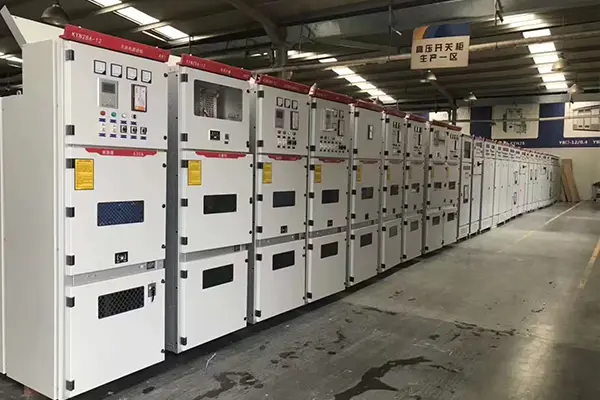
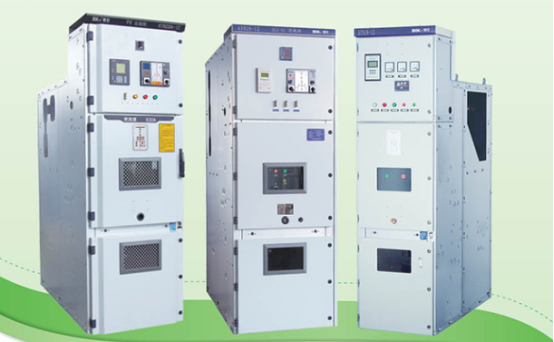
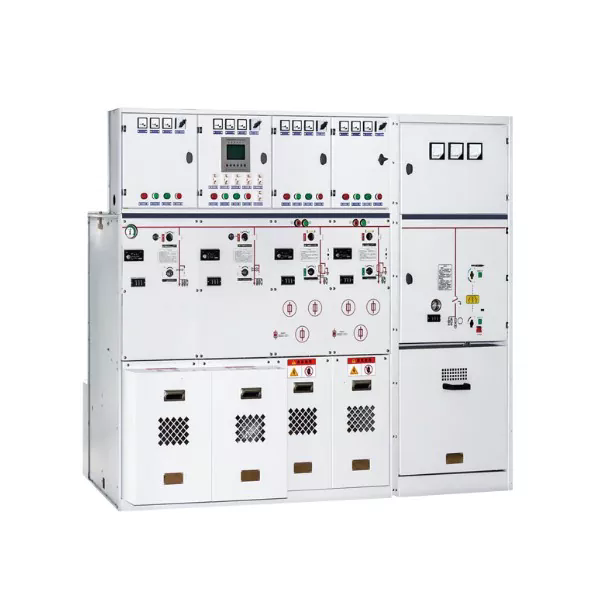
This project involves the upgrade and retrofit of low-voltage power distribution cabinets in a building materials manufacturing workshop. The workshop is equipped with high-power, high-impact loads such as crushers, conveyor belts, and air compressors. The original low-voltage distribution cabinets utilized only circuit breakers for incoming and outgoing circuits, lacking independent, visible isolation points. During routine maintenance, cabinet replacement, or cable servicing, reliance solely on opening the circuit breaker made it impossible to visually verify a complete power cut; this created significant safety hazards—such as residual voltage or accidental work on live circuits—and failed to comply with electrical safety maintenance standards.
To meet mandatory electrical safety regulations requiring a visible disconnection point for maintenance, HD13 series low-voltage knife switches (acting as visible isolation switches) were installed on the incoming and bus-section circuits of the distribution cabinets. These serve as safety isolation barriers, ensuring visible disconnection, safe maintenance, and reliable isolation.
II. Issues Prior to Retrofit
Lack of visible disconnection points and unsafe maintenance: Internal circuit breaker contacts are not visible; opening the breaker does not guarantee 100% power disconnection, posing risks of contact welding, residual voltage, and accidental maintenance on live circuits.
Non-compliance with electrical acceptance standards: Low-voltage distribution regulations explicitly require power distribution equipment to feature a visible mechanical disconnection point; configurations relying solely on circuit breakers fail safety inspection acceptance.
Low reliability of power disconnection status: External inspection cannot detect circuit breaker malfunctions or contact welding, easily leading to misjudgment by maintenance personnel and potential electric shock accidents.
Low maintenance efficiency and high risk: Lack of independent isolation means localized maintenance requires a total system shutdown, resulting in extensive power outages and significant production losses.
Absence of protective isolation layers: The lack of a primary physical isolation layer makes the system vulnerable to short-circuit faults that can cause reverse breakdown of upstream switches, indicating an incomplete protection hierarchy.
III. Equipment Configuration Plan
In accordance with low-voltage power distribution safety standards and the workshop's maintenance and operational needs, HD13 series low-voltage open-type knife switches have been installed on the incoming and bus-section circuits of each distribution cabinet. These operate in conjunction with the circuit breakers to establish a standard dual-layer configuration: "circuit breaker protection + knife switch isolation." Key Equipment Specifications
Model: HD13-400/31, HD13-600/31 Low-voltage 3-pole knife switch (with arc-extinguishing hood)
Rated Voltage: 400V low-voltage power distribution system
Rated Current: 400A–600A (matched to workshop main incoming circuit capacity)
Structural Features: Visible mechanical break, arc-extinguishing device, insulating base, high-strength copper contacts
Operational Logic: Closing energizes the circuit; opening creates a clearly visible disconnection point with no residual voltage
Operational Mode: Circuit breaker handles load switching and short-circuit protection; knife switch is used solely for no-load isolation
Safety Configuration: Insulated operating handle, anti-misoperation locking mechanism, arc protection (prevents arcing short-circuits)
IV. Application Highlights
Visible break ensures absolute maintenance safety: Contacts are fully exposed upon opening; power-off status is visually verifiable, eliminating risks of residual voltage or accidental live work.
Complies with mandatory national standards: Meets the low-voltage distribution requirement for a "clearly visible disconnection point" during maintenance; passed safety supervision and electrical completion inspections on the first attempt.
Dual-layer protection enhances system reliability: Circuit breaker handles protective tripping while the knife switch provides physical isolation; clear division of labor and hierarchy eliminates risks of switch failure.
Arc-extinguishing capability for no-load switching: Equipped with an arc-extinguishing hood to support safe opening/closing under no-load conditions without arcing or contact erosion.
Simple, maintenance-free structure: Purely mechanical design ensures low failure rates and stable conductivity; no overheating or loose connections during long-term operation.
V. Post-Retrofit Operational Results
Elimination of maintenance safety hazards: Power-off status can be visually confirmed before every maintenance task, completely preventing live maintenance and electric shock accidents; significantly improved operational safety.
Full inspection compliance: Addresses the lack of physical isolation in the low-voltage distribution system; equipment configuration is fully compliant, ensuring a smooth pass in electrical safety standardization inspections.
Precise control over power outage scope: Allows for independent isolation and maintenance of a single cabinet without shutting down the entire busbar section, effectively minimizing production losses. Stable system operation: High-quality copper contacts ensure excellent connectivity; there is no overheating, oxidation, or contact failure during full-load operation.
Long service life and low O&M costs: The purely mechanical structure is durable and reliable, requiring virtually no maintenance and ensuring zero-failure long-term operation.
VI. Case Summary
The low-voltage knife switch (HD13 isolating switch) is an essential safety isolation device for low-voltage power distribution cabinets, power cabinets, and workshop distribution system upgrades. It does not provide circuit protection or interrupt load currents; rather, its core function is to provide a visible mechanical disconnection point, serving as the final line of defense for safety during electrical maintenance. It is a mandatory component for all industrial power distribution, factory facility upgrades, and standardized acceptance projects, acting as a fundamental element for ensuring compliance, safety, and standardized operation and maintenance in low-voltage power distribution systems.
Address
No. 318, Weidian Road, Economic Development Zone, Yueqing City, Zhejiang Province, China
Tel